
The ANC’s 4-Hour May Meeting, Condensed
By • May 7, 2026 0 858
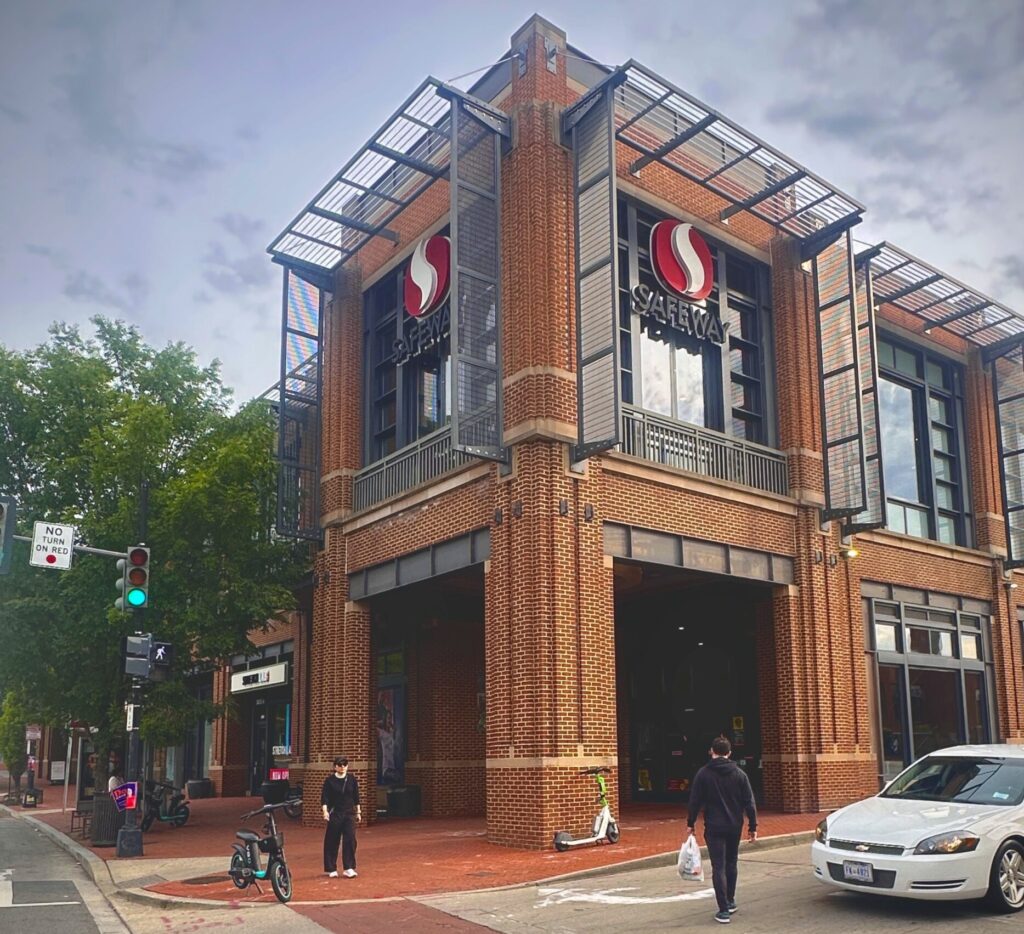
Advisory Neighborhood Commission 2E gaveled in on Monday, May 4, and gaveled out four hours later. That’s a long night by any standard. But strip away the procedural throat-clearing and the meeting delivered something rarer than usual: a clear-eyed snapshot of what’s actually keeping Georgetown up at night: Crime data the police can’t talk about. A budget the Council is sweating over. A 25-year vision for the city that ran headfirst into a roomful of skeptical commissioners. Here’s what mattered.
Public Safety: Safeway on the Clock
The Safeway at 1855 Wisconsin Ave. NW has a problem, and it’s running on a deadline. Police presence has been bumped up around the store, especially in the after-school window when most thefts happen. The message from MPD was blunt: If the trend continues, the 24-hour Safeway won’t stay 24 hours.
Beyond that, neighborhood crime stats haven’t budged much — except for the slow drumbeat of auto thefts, which refuses to quit.
Then there are the cars-on-sidewalks. A recent crash at 33rd and P sent a vehicle up onto the pavement, ending up backwards. Another smashed up near Boulangerie Christophe on Wisconsin. One crash happened roughly 100 feet from a school — close enough to make commissioners ask the obvious questions: Where are the raised crosswalks? Where are the speed bumps? MPD’s answer was the answer it always is: Those measures help, but they also slow down ambulances and fire trucks.
Then came the question nobody at the dais wanted. A member of the public asked about the manipulated crime data scandal — the one where 13 MPD officers were placed on administrative leave and now face possible termination over allegations that crime numbers were doctored to make the city look safer than it is. MPD’s response? They had no information. They could not speak on the matter. Conversation closed.
The Budget Crunch Comes Home
Council member Brooke Pinto’s office had updates, and most of them came with sharp edges.
The 311 app is still broken. Until it isn’t, call or use the website.
Committee hearings on the fiscal-year 2027 budget should wrap this week. Then come markups, then votes — the first two of three sandwiched around the June 16 primary. Pinto isn’t hiding her concern about the proposed cuts, and she’s telling residents now is the moment to advocate, not later.
Among the casualties is the Safe Commercial Corridors grants, an evidence-based public safety program. A pay freeze for firefighters has been proposed. Read those two together and ask yourself what the District is signaling about its priorities.
Juvenile curfew zones came up. Pinto wants her bills expanding youth recreation and employment moved forward — the carrot to go with the curfew’s stick.
Residents got the standard primary-election reminders: register, research ranked-choice voting, show up.
And the Georgetown DMV? Still closed. Still waterlogged. Still no reopening date.
2050 Vision Meets 2025 Reality
Rita Abou Samra from the D.C. Office of Planning came to walk commissioners through the 2050 FLUM — the Future Land Use Map, the document that sets the long-range vision for how the city grows. These get updated roughly every 20 years. The 2021 version was a touch-up. This one is a full rewrite.
“We are visualizing different city growth scenarios and collecting as much feedback as we can,” Samra said.
The new wrinkle this cycle is something called place types — a framework that looks past the building and at the experience: “So not only in terms of, Is this a large-scale, mixed-use building?” She continued: “We’re including a different policy guide that relates to building form and density, land uses, transportation and connectivity and parks and open spaces.” In other words, the planners want to talk about how a neighborhood feels, not just what it’s zoned for.
For Ward 2, the headline number is 14,000. That’s how many additional households the FLUM is sketching room for by 2050. Most of the new housing clusters near transit — Metro stations and, increasingly, the priority bus corridors that haven’t seen real growth in two decades.
The pushback came fast.
Commissioners Push Back — Hard
The feedback session was, to put it generously, heated. Someone surfaced a case study: 3100 R St. NW, a home that multiple families bid on, which ultimately went to buyers who turned it into a nonprofit office.
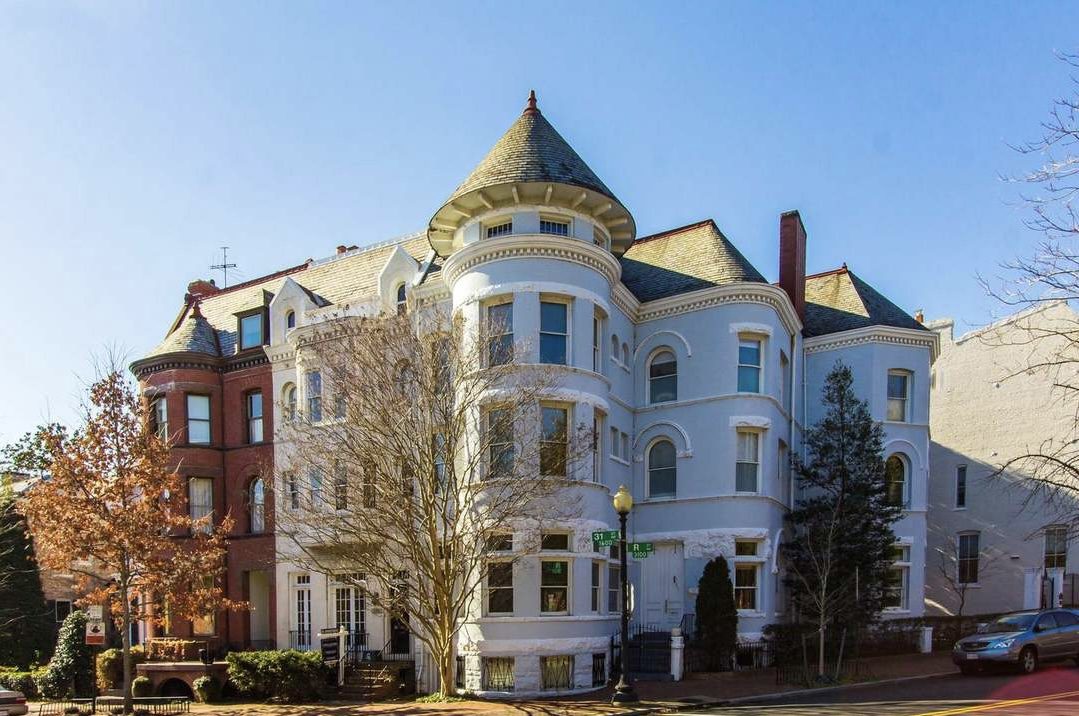
3100 R St. NW, which was purchased by individuals who turned it into a nonprofit.
“What would have been a family living there is now used as offices,” Commissioner Daniel Chao said.
Commissioner Gwen Lohse drove the point further, flagging Mayor Bowser’s proposal that would let District homeowners buy a second property and run it as an Airbnb.
Commissioner Mimsy Lindner had been hearing this song for a while. “I have a lot of conversions from offices to residences in my district,” she said. “My big question is, Who are all these people moving here? It’s more and more expensive to live in the city, we’re losing a lot of perks of being a neighbor and mom-and-pop shops are getting pushed out by bigger shops.”
Her broader point cut closer to the bone: If D.C. genuinely expects 14,000 more households in Ward 2, the city had better deliver schools and affordability worthy of them. Otherwise, the FLUM is a real-estate brochure with civic ambitions.
For those who want to dig in: dc2050.dc.gov/pages/resources.
D.C. Water: Lead Lines Out, Traffic Cones In
Sean Moore, representing D.C. Water, gave the room a heads-up on lead service line replacement work coming to Wisconsin Avenue and P Street. Expect temporary lane closures, sidewalk closures and shifted traffic patterns. More phases are queued up after this one. Concerns and questions go to [email protected] or 202-787-4044.
New Business: Markets, Speed Traps, Bike Lane Fight
The planned closure of Scheele’s Market, a longtime neighborhood landing spot, has triggered a grassroots response. A group of residents is organizing to educate the community and potentially put together a collective buyer pool to keep the market a market.
A District Department of Transportation-focused resolution on speeding and pedestrian safety drew the kind of weary commentary you’d expect; dealing with DDOT, several commissioners noted, is a constant push and pull.

A project for a bike lane that would span about 14 blocks, called the M Street Corridor Safety Project, was discussed. Courtesy Georgetown BID.
Then came the M Street Corridor Safety Project, a roughly 14-block bike lane that has become this season’s signature infrastructure brawl. The protected lane currently funded ends at 28th and M, because that’s where the money runs out. A separate, unfunded project would carry it from 28th to Key Bridge. A longer-term strategic bike plan is also in motion.
The proposal on the table has two pieces: building a curb lane that cuts in from the multimodal trail added in Rose Park along Rock Creek; and terminating the protected lane at 28th and M.
The ANC isn’t sold. Its draft resolution, sent to DDOT for review, asks the agency to push the lane’s endpoint one block west — to 29th and M — citing 28th and M as one of the “most congested and chaotic” intersections in Georgetown. Translation: don’t dump cyclists into a blender and call it a safety project.
Other Resolutions
Two more resolutions made the docket: one supporting a new mural in Burleith and another tied to a Food Waste Smart Bin. Smaller items, but the kind of business that keeps a neighborhood neighborly.
This story used AI for clarity and to make things more succinct.