Celebrating America’s 250th at George Washington’s Mount Vernon
By • June 10, 2026 0 781

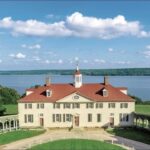
George Washington’s Mount Vernon on the Potomac River.
By Mia Dinunzio
The Potomac lapped quietly below Mount Vernon’s hillside as visitors drifted along the estate’s pathways, pausing beneath old trees and in gardens overlooking the water. On a warm June morning, the grounds felt suspended between eras, where present-day footsteps crossed a landscape shaped by centuries of American history.
Long before Mount Vernon became one of the nation’s most visited historic sites, it was the home and working estate of George Washington. Today, as the United States approaches the 250th anniversary of its independence, it is once again a gathering place. Through exhibitions, lectures, commemorations and public programs, the estate invites visitors to explore both the nation’s founding and the complex legacy that continues to shape American identity.
While many historic sites preserve fragments of the founding era, Mount Vernon preserves the setting in which that history unfolded. Visitors move through the mansion, gardens and grounds where Washington lived and worked. Among the newest offerings is George Washington: A Revolutionary Life, an immersive exhibition that examines Washington’s leadership while acknowledging the enslaved community whose labor sustained Mount Vernon. Historical artifacts, recreated environments and personal narratives encourage visitors to look beyond familiar images of the first president and consider the broader world in which he lived.
Visitors can also experience a reimagined mansion tour, including newly restored spaces such as the Washingtons’ bedchamber, and walk through Patriots Path, a Revolutionary War encampment where interpreters recreate daily military life. A special exhibition of Washington’s clothing includes several rare garments, among them his prized navy-blue coat from 1776.
“This summer, Mount Vernon offers one of the most meaningful and memorable ways to celebrate America’s 250th anniversary,” said Douglas Bradburn, president and CEO of Mount Vernon. “Whether guests are enjoying fireworks over the Potomac, sampling whiskey made using George Washington’s original distilling methods or walking through the mansion and historic grounds, they are experiencing the history that created our nation.”
The estate’s programming is perhaps most compelling when it turns toward harder truths. During Freedom Before Emancipation, a Juneteenth program on June 19 and 20, visitors will encounter the stories of enslaved people who lived and labored at Mount Vernon, resisted bondage and pursued freedom long before emancipation.
Guests are asked to grapple with the contradictions at the heart of the founding era: a nation born from revolutionary ideals yet deeply entangled with slavery. On June 16, historian Gautham Rao will discuss his book White Power: Policing American Slavery, exploring the relationship between slavery, power and law enforcement in early America.
Yet remembrance is only one part of the anniversary. As July approaches, the estate will fill with fifes, drums and celebration. Fireworks on July 3 and 4 will illuminate the Potomac, while An American Celebration on July 4 will feature historical demonstrations, patriotic music and a naturalization ceremony welcoming new citizens.
Beyond these signature events, visitors can enjoy whiskey tastings inspired by Washington’s distillery, a new outdoor beer garden, and the estate’s museum, working farm and education center. As the nation marks 250 years since independence, Mount Vernon offers more than celebration. It offers a place to reflect, reconsider and engage with the continuing story of the United States.
-

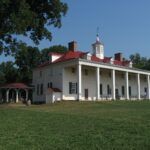
- West facing view of Mount Vernon.
-
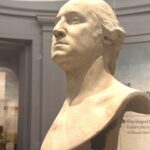
- The famous bust of George Washington at Mount Vernon is a terracotta sculpture created in 1785 by the renowned French sculptor Jean-Antoine Houdon. Considered the most accurate and authentic likeness of Washington, it is displayed in the Donald W. Reynolds Museum and Education.
-
- Blue coat that George Washington wore and that embodies his philosophy on dress currently on display. Purchase, 1949. (Gavin Ashworth/MVLA)

-
- George Washington’s Mount Vernon on the Potomac River.