
Happy 275th Birthday, Town of Many Georges!
By • June 10, 2026 0 347
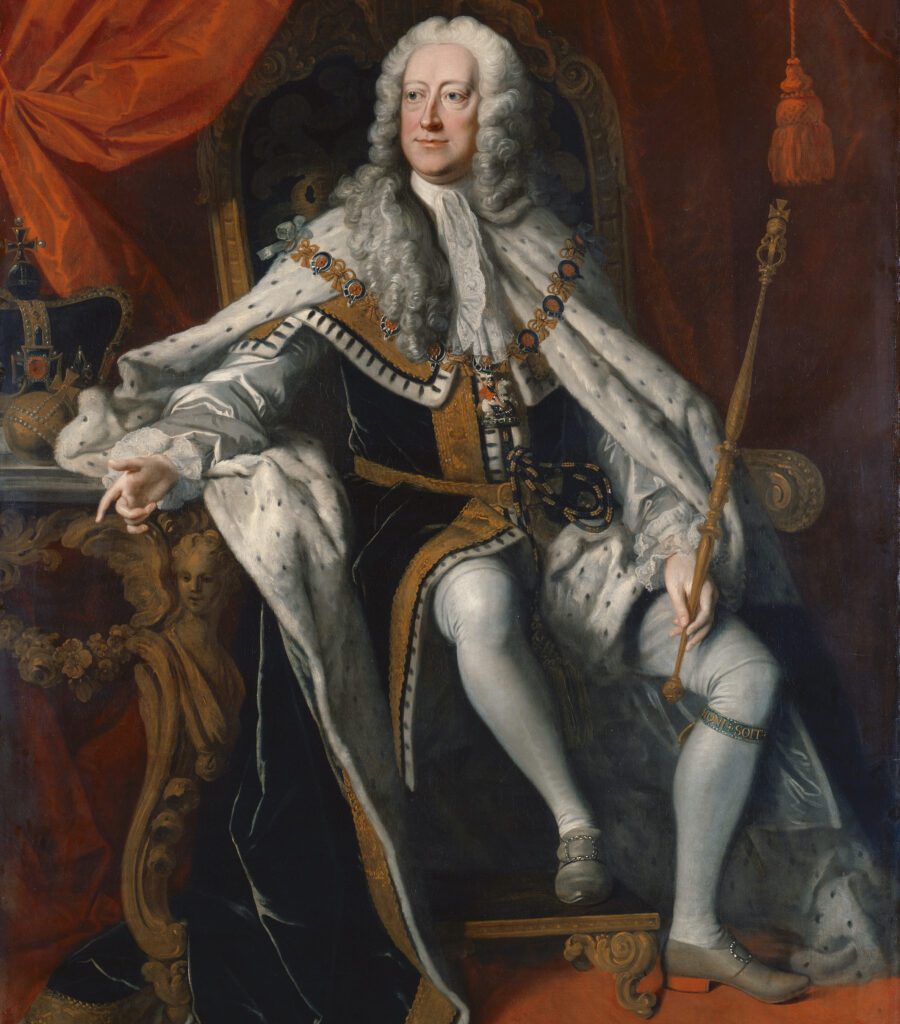
On May 15, 1751, the colonial legislature of Maryland passed a measure to erect “a Town on Potowmack River, above the Mouth of Rock Creek in Frederick County.” Thus, Georgetown was born. It became a municipality in 1789 and was merged into Washington, D.C., in 1871.
The town on the Potomac sat prosperously at the head of navigation, past which tall ships could not venture upstream. Its main business was the movement of tobacco, along with other agricultural products, as well as enslaved persons.
Today, Georgetown, the oldest neighborhood in the nation’s capital, is still prosperous, these days humming with shopping, dining and entertainment-seeking crowds of residents, students and visitors.
The founder of Georgetown, Col. Ninian Beall, was a red-haired, six-foot-seven Scotsman who lived to be 92. In the 17th century, he owned 800 acres of land — destined to become Georgetown — which he named the Rock of Dumbarton after a prominent geological feature in his home country.
In his honor, the following words appear on a bronze plaque on a rock in front of St. John’s Church on O Street: “Colonel Ninian Beall Born Scotland 1625, Died Maryland 1717, Patentee of Rock of Dumbarton, in grateful recognition of his service.”
In 1751, his son George Beall and George Gordon sold (or were forced to sell) 60 acres for the new town. The act establishing the town reads, in part: “Be it therefore Enacted by the Right Honourable the Lord Proprietary, by and with the Advice and Consent of his Lordship’s Governor, and the Upper and Lower Houses of Assembly, and the Authority of the same, That Capt. Henry Wright Crabb, Master John Needham, Master John Clagett, Master James Perry, Master Samuel Magruder the third, Master Josias Bealle, and Master David Lynn, shall be and are hereby appointed Commissioners for Frederick County aforesaid; and are hereby authorized and impowered, as well to buy and purchase sixty Acres, Part of the Tracts of Land belonging to Messieurs George Gordon and George Bell, at the Place aforesaid, where it shall appear to them, or the major Part of them, to be most convenient, as to survey and lay out, or cause the same to be surveyed and laid out, in the best and most convenient Manner, into eighty Lots, to be erected into a Town.”
Residents still ask: For which George, specifically, was Georgetown named?
We could point to the scion of the famed Beall family, or to that other wealthy Scot, Mr. Gordon, owner of the tobacco inspection station and a good deal of land. More likely, the town at its inception saluted the reigning monarch, George II, grandfather of the infamous George III, fall guy for the American Revolution and scene-stealing character in “Hamilton.”
Others have referenced George Washington, although the timing is off. Still, be sure to visit Tudor Place — former estate of Thomas Peter and Martha Parke Custis Peter, a granddaughter of Martha Washington — and catch the exhibition “Founding Fortunes: The Estate Sale of Martha Washington.”
With that foursome in mind, residents years ago nicknamed the village “The Town of the Four Georges.” There was even a legendary restaurant called the Four Georges in the Georgetown Inn, long before 1310 Kitchen & Bar.
Other names for parts of what is now Georgetown include Tahoga, a village at the mouth of Rock Creek inhabited by the Nacotchtank — also known as Anacostans, an Algonquian-speaking Indigenous people — and the memorable Knave’s Disappointment, a failed 17th-century development purchased by Gordon.
Crisscrossed in time and space with the names of the famous and not so famous, Georgetown endures as that special place on the banks of the Potomac.
It is interesting to note that George Beall VIII (yes, that family) was the federal prosecutor whose actions led to the resignation of Vice President Spiro Agnew in 1973.
So, happy birthday, Georgetown! You got us coming and going — and are looking very good for 275.