
Gloria Steinem, 1934-2026
By • September 8, 2026 0 358
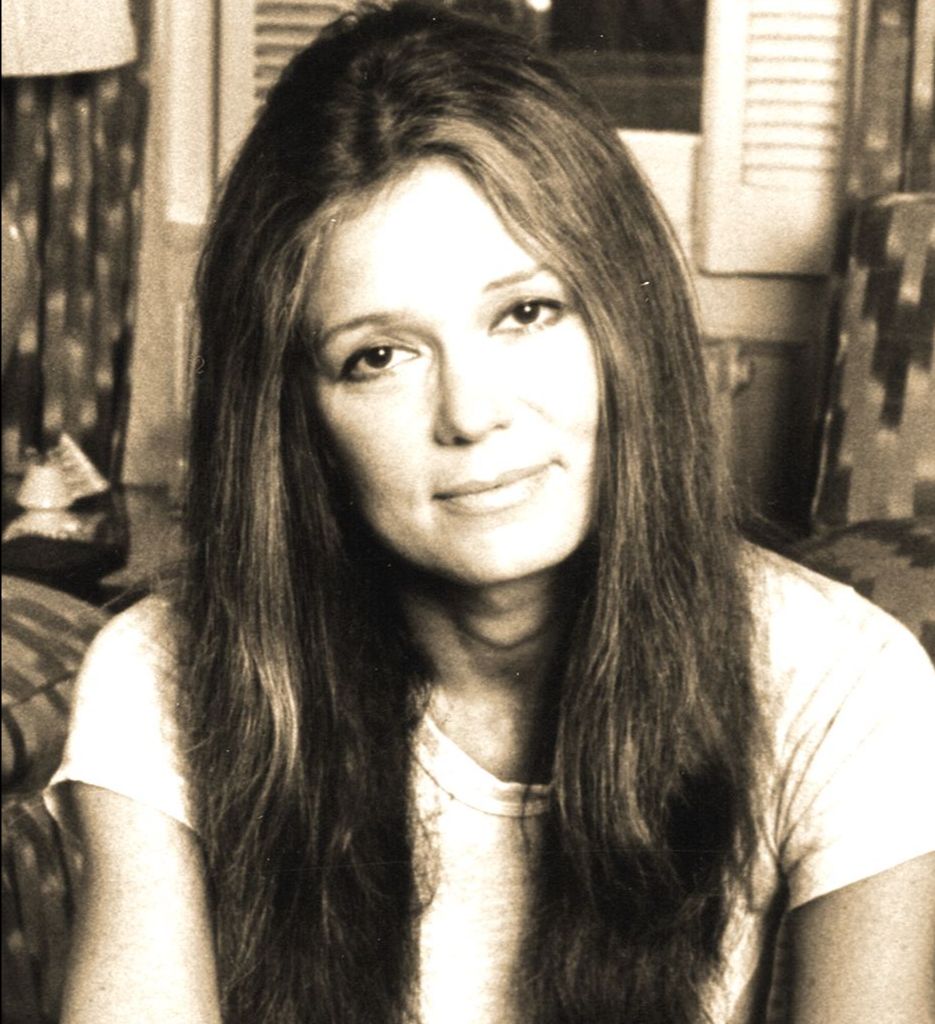
The Western High School Alumni Association (Go, Raiders!) lists 35 “notables,” including author Marjorie Kinnan Rawlings ’14; financial journalist Austin Kiplinger ’35; defensive lineman Ray Krouse ’44; Edward White ’48, the first American to walk in space; and TV news anchor Kaity Tong ’65.
Two more who achieved fame after leaving Western’s majestic building at 35th and R Streets NW, which became Duke Ellington School of the Arts in the 1970s: Margaret Gorman ’23, the first Miss America; and Gloria Steinem ’52, who died on Sept. 2 at age 92.
Steinem attended Western only for her senior year, while living on Reservoir Road with her older sister Suzanne and her mother Ruth, who was separated from her father.
Nine years apart, both sisters attended Smith College, one of what were then the Seven Sisters women’s colleges. A third Smithie, four years before Suzanne: Betty Friedan, author of “The Feminine Mystique” and co-founder of the National Organization for Women, Gloria’s predecessor and embittered rival as a feminist leader.
Born in 1934 — on March 25 in Toledo, Ohio — in her 20s Steinem lived through a dramatic shift in how American society viewed women and how American women viewed themselves.
In 1957, aged 22, she broke up with her fiancé and, on the way to India as a Chester Bowles Fellow, had an abortion, performed illegally by a London doctor.
A piece by Penelope MacRae in the Guardian underlined the importance of Steinem’s two years in India, noting (with a photo): “She adopted the sari as everyday dress, writing: ‘Saris make one stand straighter and walk more slowly and worry less about time and efficiency.’”
Traveling and interacting with followers of Mahatma Gandhi, Steinem came face to face with poverty, women’s struggles, the aftermath of caste violence and grassroots political organizing.
“India was not entirely unfamiliar territory,” explained MacRae. “Her mother and paternal grandmother had been Theosophists, part of a spiritual movement that drew heavily on Hindu and Buddhist ideas such as karma and reincarnation, and at college Steinem had written a paper on the Communist party of India.
“When her fellowship money ran out, she supported herself by writing for Indian newspapers, doing advertising work and taking occasional modelling jobs — including posing in saris.”
In the West, the turbulence of the 1960s, triggered by the assassination of President Kennedy, with others to follow, tracked the intensification of the Vietnam War (which Steinem publicly opposed), the sexual revolution and the civil rights and women’s movements. Steinem’s writing suggests how she and the world around her were evolving.
It was the decade of both the miniskirt and the pantsuit, credited to British designers Mary Quant and Ossie Clark, respectively. Based in New York, Steinem wrote for the New York Times and more often for women’s magazines including Cosmopolitan, Glamour, McCall’s and Vogue.
She published her first book (other than a 1957 guidebook, “A Thousand Indias”), “The Beach Book,” in 1963. Sari Edelstein described it last year in Public Books: “In this massive compendium of stories, poems, song lyrics, riddles, games and drawings, Steinem offers detailed instructions on how to build a sandcastle, how to tan, how to peel if you burn, how to bury someone in the sand, how to build and fly a kite and more. The original dust jacket was made of foil — so it could double as a tanning aid. The pages are sprinkled with loopy, whimsical drawings.”
The same year, Show magazine published Steinem’s attention-getting exposé “A Bunny’s Tale,” describing how she uncovered to go undercover as a Playboy Club hostess.
Steinem was a founding contributing editor of New York magazine, launched in 1968, also the debut year of “You’ve Come a Long Way, Baby” women’s cigarette brand Virginia Slims. A few years later, she and others founded Ms. magazine, which began as an insert in New York’s December 1971 issue. (The honorific “Ms.” officially replaced “Miss” and “Mrs.” in the New York Times in 1986.)
The first regular issue of Ms., in July of 1972, included a “We have had abortions” petition signed by 53 prominent women, including Steinem, calling for the procedure’s legalization.
1972 was a landmark year both for Steinem and for second-wave feminism, a term popularized by a 1968 New York Times Magazine article by Martha Lear, “The Second Feminist Wave: What do these women want?” Congress enacted Title IX and passed the Equal Rights Amendment (though the ERA failed to meet the ratification deadline). Oral contraceptives became legally available to unmarried women in every state. And “That Girl” Marlo Thomas’s children’s album “Free to Be … You and Me” was released.
It was also the year of the Democratic National Convention in Miami, at which the National Women’s Political Caucus, which had elected Steinem as its spokesperson over Friedan, failed to get a pro-abortion plank into the platform.
Nora Ephron wrote at the time: “It is probably too easy to go on about the two of them this way: Betty as Wicked Witch of the West, Gloria as Ozma, Glinda, Dorothy — take your pick. To talk this way ignores the subtleties, right? Gloria is not, after all, uninterested in power. And yes, she manages to remain above the feud, but that is partly because, unlike Betty, she has friends who will fight dirty for her. Still, it is hard to come out anywhere but squarely on her side. Betty Friedan, in her thoroughly irrational hatred of Steinem, has ceased caring whether or not the effects of that hatred are good or bad for the women’s movement.”
Despite George McGovern’s backpedaling on abortion, and the Nixon landslide, abortion was legalized in the Supreme Court’s Roe v. Wade decision of 1973 (overturned in 2022). Also in 1973: the initial commercial publication of “Our Bodies, Ourselves: A Book By and For Women.”
The Friedan-Steinem split (some of which seems to have been due to a chip on Friedan’s shoulder) contributed to the collapse of second-wave feminism, criticized as the creation of — and thus mainly relevant to — white, straight, middle-class women and divided on issues such as pornography and prostitution/sex work.
The hipness (long hair, jeans and oversized Ray-Bans) and whiteness (half Presbyterian, half Jewish) that made Steinem a photogenic public figure became seen as passé and limiting. Yet from her home on East 73rd Street in Manhattan she continued to travel and speak widely, against apartheid, the Gulf War and, in 2015, the ongoing division of Korea. In January of 2017, she was a speaker at the Women’s March on Washington.
Third-wave feminism is thought to have begun around the time of Anita Hill’s testimony — dismissed by the Senate Judiciary Committee — during the 1991 confirmation hearings of Supreme Court nominee Clarence Thomas. “Becoming the Third Wave” by Rebecca Walker (daughter of Alice) was published in Ms. magazine in 1992. A fourth wave, said to have begun around 2012, flowered during the #MeToo movement.
In 2000, Steinem, who had dated a number of well-known men (and called Ford Foundation head Franklin Thomas the love of her life in an interview with the New York Times last January), married David Bale, who died in 2003. Though never a mother — other than to Christian Bale, who became her stepson — she helped the Ms. Foundation for Women start Take Our Daughters to Work Day in 1992. First held in 1993, the event, on the fourth Thursday in April, was extended to boys 10 years later.
In contrast to Friedan, who seems to be represented only by a volume in the young adult series “Women of Our Time,” the picture books and YA books about Steinem include: “Gloria Takes a Stand,” “Gloria’s Voice,” “The Story of Gloria Steinem,” “Gloria Steinem” in the “Little People, Big Dreams” series and, co-written by Steinem with 2011 Nobel Peace Prize winner Leymah Gbowee, “Rise, Girl, Rise: Our Sister-Friend Journey Together for All.”
Steinem was the author of 10 books, give or take, including several collections of her essays, notably 1983’s “Outrageous Acts and Everyday Rebellions,” and a 1988 book about Marilyn Monroe with photos by George Barris. Her memoir “An Unexpected Life” will appear on Sept. 22.