
Defending D.C. Means Defending American Democracy
By • September 16, 2026 0 238
By Robert C. White Jr.
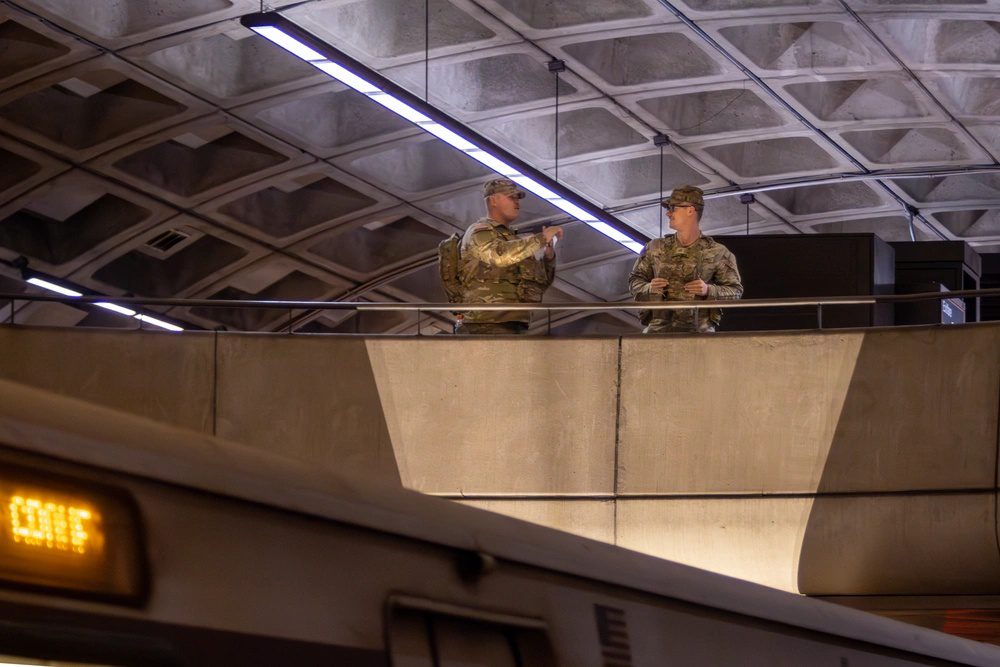
For more than a year, Washingtonians have lived under a military presence that we did not request and our elected local government cannot end. We see troops in Metro stations, on sidewalks and throughout the public spaces where we work, raise our families and gather as a community.
The most alarming part is how quickly an extraordinary sight can become ordinary. We adjust our routes. We lower our voices. Parents search for words to explain the uniforms and weapons to their children. We keep moving because life requires it, but the questions remain: Who decided this for us? How long will it continue? Why do Washingtonians have so little power over what happens in our own city?
This is what the erosion of democracy feels like. It feels like looking over your shoulder in the place you call home.
I am a fifth-generation Washingtonian. I know this city beyond its monuments and federal buildings. Washington is go-go music spilling from an open window. It is neighbors checking on seniors after a storm. It is small businesses that fuel our economy, children racing through recreation centers and families building lives across generations. D.C. is home.
Our city faces real challenges. Families struggle to find affordable housing. Parents need stronger schools, young people need safe places to go and workers need jobs that allow them to build stable lives. National Guard troops cannot build homes, teach children, expand mental health care or create economic opportunity.
In August of 2025, President Donald Trump ordered National Guard troops into Washington and temporarily assumed control of the Metropolitan Police Department. Thousands of Guard members from the District and several states have since served here.
D.C.’s mayor does not control the District’s National Guard. Congress could give the District that authority, but it has not. That lack of control carries a direct consequence: the president can deploy D.C.’s Guard in our city without the consent of our mayor or residents.
Because each state’s governor controls its National Guard, I wrote to the governors that sent troops from their states to Washington and urged them to bring them home.
But the Guard deployment exposes a larger problem. The same political structure that denies D.C. control of its Guard also denies our residents full representation and complete authority over our local affairs.
More than 700,000 Washingtonians pay federal taxes, serve in the military and participate in our democracy. Yet we have no voting senators, no vote on final passage in the House and no final authority over our local laws or budget. Congress can intervene in decisions made by the mayor and Council that D.C. residents elected.
Appealing to governors can address the issue of troops sent from their states. However, protecting D.C.’s broader right to govern itself requires us to confront members of Congress who threaten home rule. That is why I launched Defend D.C.
We are taking this fight beyond D.C.’s borders and into the districts of representatives who attack our autonomy while neglecting the needs of their own constituents. If they insist on governing Washington, they should answer to the people they were elected to serve. Defend D.C. is a coalition of D.C. home rule and civil rights organizations that have always carried Washington through difficult moments.
We share a fundamental belief: D.C. cannot defend home rule alone. We need durable relationships inside and outside Washington. Coalition-building turns individual frustration into an organized and sustained defense of the District. If the federal government can override the will of an entire city because its residents lack equal representation, then that failure belongs to our national democracy.
Defending D.C. means defending the people who call it home and affirming that we deserve what democracy promises everyone else: a meaningful voice in the decisions that govern our lives.
Robert White, an at-large member of the Council of the District of Columbia, is the presumptive D.C. Delegate to Congress, beginning in January.