
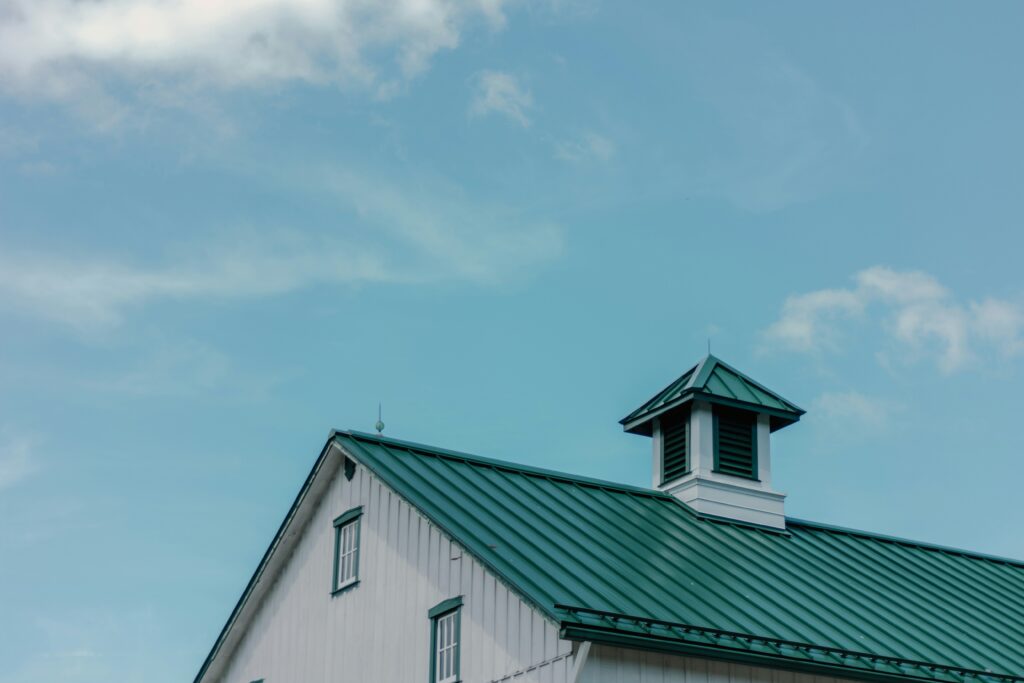
Roofs are like time capsules – one can read an entire era from what people put over their heads. The past speaks to the present via the warm shades of faded, sunbaked terracotta roof tiles in Phoenix or the sound of the patter of rain on a metal roof in Philadelphia or Boston.
Many of the roofing materials and techniques of yore are replicated today in present-day buildings that showcase the same styles found earlier throughout America. Although in nascent coastal America, roofs were made with stacked leaves and thatch, those same roofs would have cracked and leaked in early Southwest structures. Old-school materials like thatch were, indeed, breathable, locally available and surprisingly insulating, but just not a great match for the parching sun, pests and fire that easily destroyed entire villages in the west and southwest. Hence, the S-style clay roof tiles, or pantiles, which held cooler night air became popular in early southwestern homes.
Alongside pantiles, which were brought to the New World by Spanish settlers, flat clay tiles were also used in early American construction, as they were simpler in shape and often used where local clay sources were abundant. The plain or flat rectangular tiles most commonly used from the 17th through the beginning of the 19th century measured about 10 inches long and had two holes at one end for a nail or peg fastener. Sometimes mortar was applied between the courses to secure the tiles in a heavy wind.
Wooden shingles were also a popular option throughout the early American colonies, made of western red cedar and pine, they were durable and could be easily shaped. They were often treated with pine pitch, linseed oil, or brick dust to protect them against weather and to achieve the desired colors like gray, brown, or red.
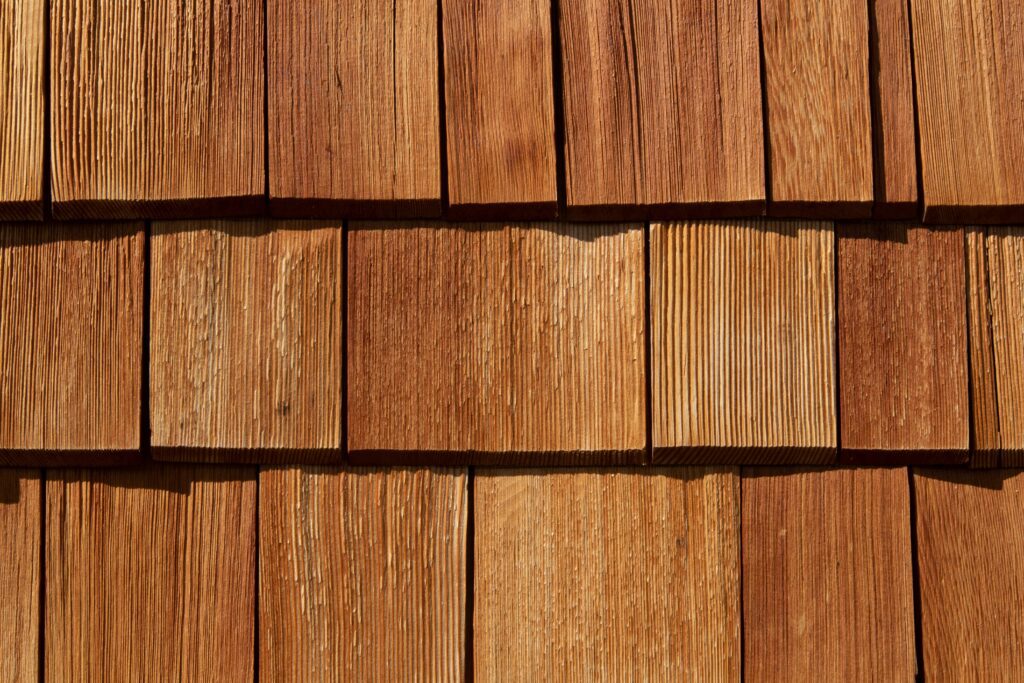
Cedar shingles, a staple of early American roofs. Photo: Jan Ludwig Tiedemann
Wood shingles, clay roofing tiles and durable, but breakable, slate shingles, were the predominant roofing choices until the mid-19th century. By the industrial revolution, they were often replaced by sheet-metal roofs, with the evolution of new techniques for metal roofing. Copper with standing seams covered some of the more notable early American roofs and flat-seamed copper was used on many domes and cupolas. Up until the late 18th century, copper sheets had been imported from England, but the development of metal rolling mills made it possible to mass-produce sheets of iron for roofing in America, enabling its widespread use, especially since it was durable and fire-resistant. The 1820 invention by Thomas Dunlap of the power roller enabled continuous rolling of sheet iron, laying the foundation for modern sheet-metal rolling mills. Corrugating stiffened the sheets, and allowed greater span over a lighter framework, as well as reduced installation time and labor. By the mid 19th century, the method for making metal roofs included galvanizing it with zinc to protect the base metal – lead, copper or iron – from rust.
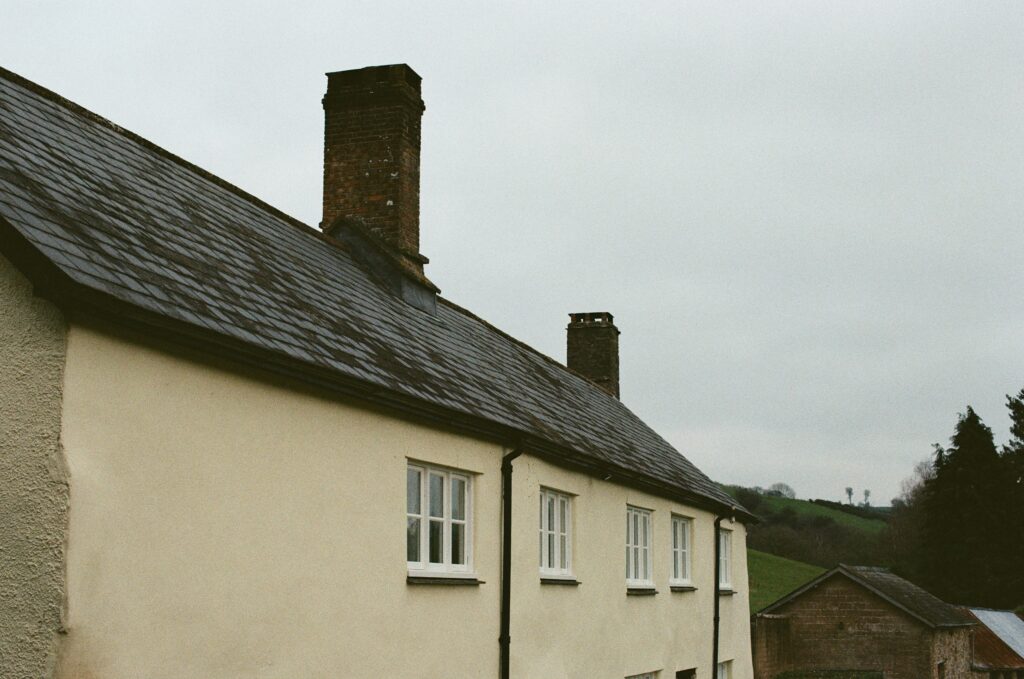
A slate roof on a traditional countryside home. Photo: Tanya Barrow
Once the rolling mills were well established in this country, low cost, light weight, and low maintenance tin plate, known as tin roofing, became popular. Embossed tin shingles, with their myriad patterns, were used throughout the country in the late 19th century. Terne, a cheaper version of tin shingles, was a thinner steel sheet coated with an alloy of lead and tin. Tin roofs were kept well-painted, usually red or, green – to imitate the green patina of copper.
Historic roofing materials continue to be used today on modern roofs. Metal roofing has again become popular in residential markets in recent decades, but even today’s metal roofs can corrode from “galvanic action. Corrosion occurs when dissimilar metals, such as copper and iron, are used in direct contact, or when the metals react chemically against each other in the presence of an electrolyte such as rainwater. This can happen when either a copper roof is decorated with iron cresting, or when steel nails are used in copper sheets. However, experienced contractors can prevent corrosion by inserting a plastic insulator between the dissimilar materials.
As American society evolved, timber framing ushered in varying pitch and structure, and different periods in American architecture brought varying roof forms and lines. Roofing materials – slate, wood shingles and metal – changed to suit the application. For instance, colonial-era houses often had steeply pitched roofs to shed snow and rain effectively. Gable roofs, with two slopes meeting at a central ridge, were common in New England. During the mid-1800s, gabled roofs with Doric columns became widespread, and styles like Greek Revival and Gothic Revival often featured steeply pitched gables. Gothic Revival, with its pointed arches and decorative wood trim on gabled roofs showed up in the 1830s, echoing the vertical emphasis of medieval Gothic structures and allowing for dramatic silhouettes on churches, schools, and homes. During the Victorian era (1830s to 1900s), those gabled roofs were designed with steeper pitches and ornate bargeboard trim. Craftsman-style roofs from 1905 to 1930, featured pitched gables with wide eaves and decorative brackets, and from the 1880s through the 1950s, Colonial Revival roofs were symmetrical, medium-pitched roofs with regular dormers.
During the 20th century, the rise of synthetic materials, such as asphalt and rubber, transformed the roofing industry. Asphalt shingles were developed for low- and steep-sloped roofs, as they were lightweight, easy to install, and cost-effective. Asphalt roofing became widely accessible, and homeowners could finally count on predictable maintenance cycles and installers could work faster. Literally, the rows of reliable asphalt roofs changed the American streetscape.
After a period of market experimentation with various shapes, patterns, and textures, mid-century improvements introduced fiberglass, improving fire ratings and moisture resistance. Laminated shingles provided enhanced aesthetics and extended lifespans, maintaining their market dominance for many American homes. In recent decades, standing seam steel, aluminum, and copper roofs and advances in coatings and thermal breaks reduced noise and improved energy efficiency, making metal competitive with traditional asphalt shingles.
Currently, green roofs are very popular due to their sustainability – they are artificial ecosystems that provide solutions to environmental challenges such as climate change and urban heat and aid in the conservation of both cooling and heating energy. They mitigate air pollution, promote control of runoff and promote biodiversity, thus, the scientific literature of the last several decades has shown a remarkable number of associated benefits spanning a broad range of sustainability areas, popularizing green roofs.
The myriad modern-day roof styles and materials emphasize resilience to climate extremes and energy generation and include self-healing membranes, embedded sensors for leak detection, and recyclable composite roofing. The next chapter of roofs respect the past and are also future focused – still honoring dependable shelter that looks good and lasts.
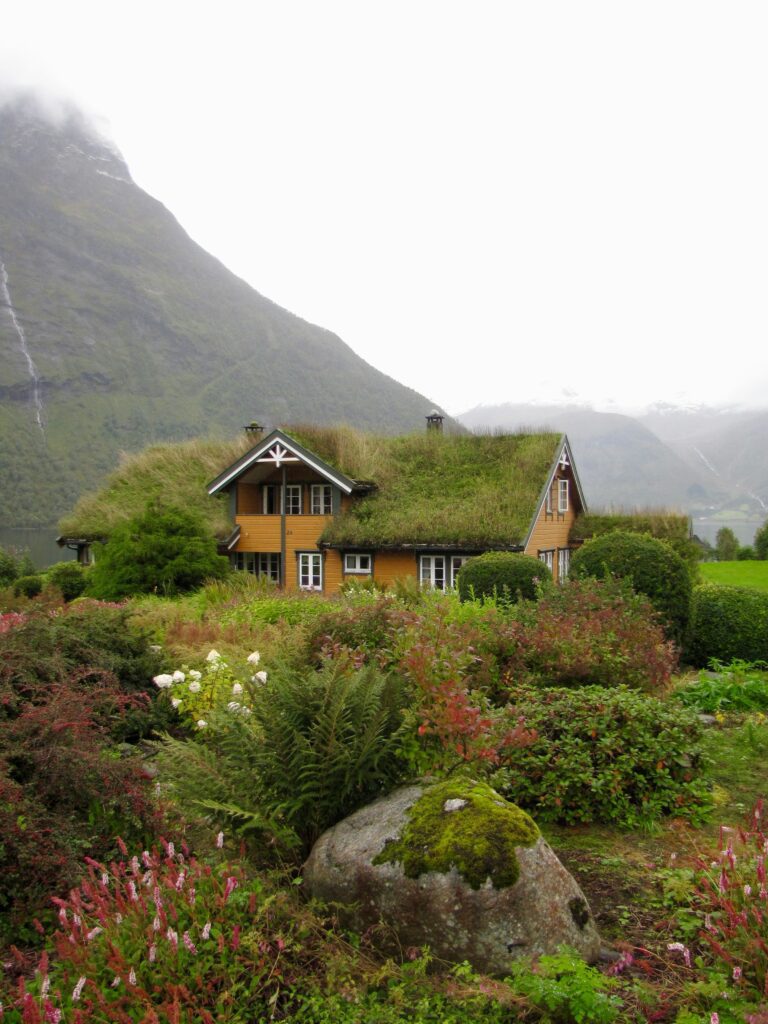
A traditional sod roof in Hjørundfjorden, Norway. Photo: Jim Petkiewicz