
Fall Arts Preview: Visual Arts
By • September 17, 2026 0 366
Weaving an Empire: Textiles of the Inka World
The George Washington University Museum and the Textile Museum
Through Dec. 19, 2026
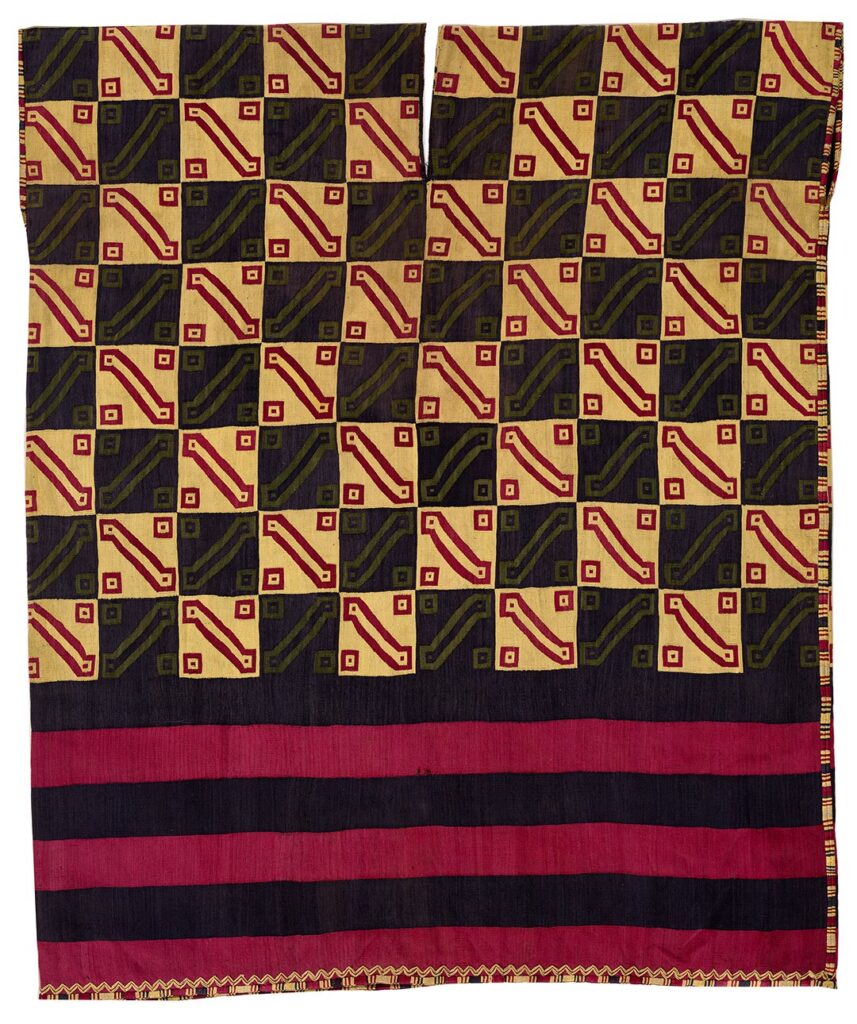
“Weaving an Empire,” which opened on Aug. 15, displays nearly 50 colorfully patterned garments from communities under Inka rule during the 15th and 16th centuries. Centered on the Cuzco Valley in modern-day Peru, the Realm of the Four Parts grew to occupy portions of what are now Ecuador, Bolivia, Colombia, Argentina and Chile. The objects on view, including men’s tunics, women’s dresses and shoulder mantles, belts, headbands and sandals, were made from the hair of llamas, alpacas, vicuñas and guanacos, cotton and feathers. Curated by Dr. Shelley Burian, Lisa and Bernard Selz Curator of Textile Arts of the Americas, the exhibition explores how these garments — most from the museum’s collection — reflected local styles and traditions as well as their wearers’ allegiance to the empire. A virtual roundtable discussion on Inka textiles will take place on Saturday, Dec. 5.
Textile Museum Inka
Man’s tunic, Peru, Late Horizon (1470-1532). Courtesy GWU Textile Museum.
Interwoven: A Tradition of Textiles
Hillwood Estate, Museum & Gardens
Through Jan. 3, 2027
Throughout her life, Marjorie Merriweather Post revered textiles, preserving antique lace samples, apparel from her girlhood and textile work by the women in her family. She collected handmade lace pieces and liturgical vestments and textiles from the Russian Orthodox Church, furnished her homes with sumptuous fabrics and attired herself and her three daughters in the finest fashions. “Interwoven,” which opened in June, presents centuries’ worth of lace, embroidery, needlepoint, quilts and coverings, along with commemorative textiles. Among the outstanding items are a 17th-century point de France lace panel replete with ornate iconography and an 18th-century embroidered Russian liturgical textile trimmed with pearls and glass beads. In addition, the exhibition features works by contemporary textile artists such as Manca Ahlin and Sophia Narrett.
Rafael Lozano-Hemmer: Look Alive
Georgetown University Art Galleries
Sept. 18, 2026 – April 11, 2027
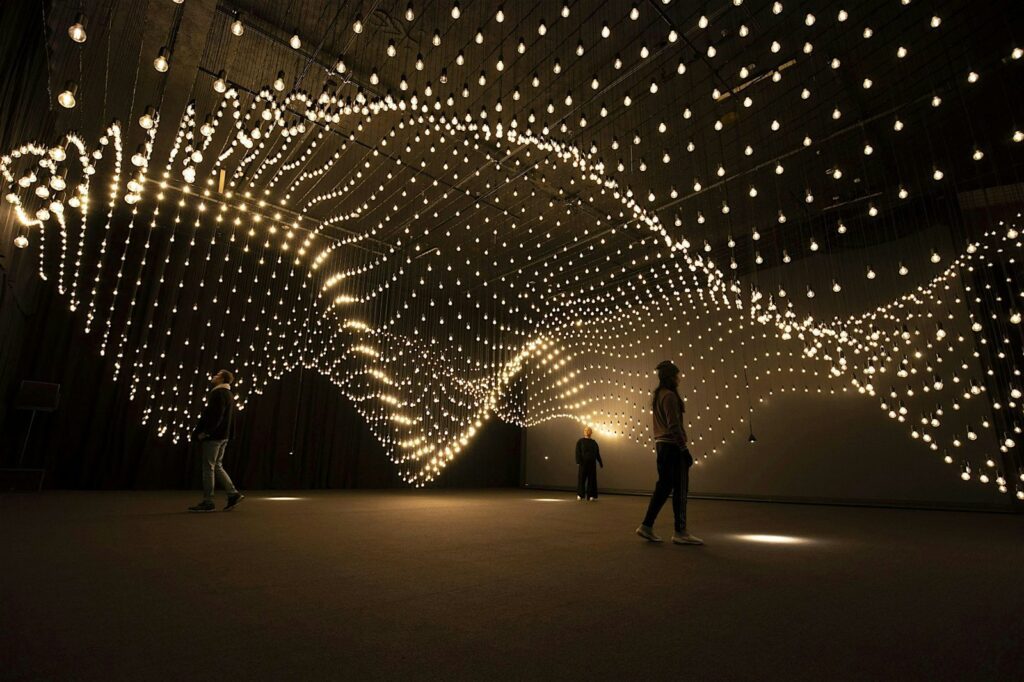
“Rafael Lozano-Hemmer: Look Alive” brings together several installations by the acclaimed Mexican Canadian artist, born in 1967. The exhibition features the newest work in Lozano-Hemmer’s “Pulse” series, “Pulse Map,” a site-specific installation created for the Maria and Alberto de la Cruz Gallery. Visitors will traverse a labyrinthine field of nearly 3,000 polycarbonate lightbulbs, each of which glimmers in sync with the recorded heartbeat of a prior visitor. Concerned with the act of looking, the works in the Lucille M. & Richard F. X. Spagnuolo Gallery use cameras to detect visitors’ presence and location. In “Surface Tension” of 1992, one is followed by a large human eye. In “Reporters With Borders” of 2007 (on view through January), hundreds of TV news anchors from the U.S. and Mexico appear in a constantly changing mosaic, their voices activated by visitors’ silhouettes.
Light Is a Plastic Medium: The Photography of Carlotta Corpron
Hirshhorn Museum
Oct. 16, 2026 – March 14, 2027
“Light Is a Plastic Medium” showcases 48 recent gifts by Herbert Lust to the Hirshhorn, along with loans from his collection. The exhibition positions American photographer and educator Carlotta Corpron (1901-1988) in the artistic vanguard through six bodies of photography that she made in Texas from the late 1930s to the early 1950s. Corpron moved to Denton, Texas, in 1935 to teach art history and design at Texas State College for Women (now Texas Woman’s University). Yet she aligned herself with internationally influential photographers such as Alfred Stieglitz, László Moholy-Nagy and György Kepes, who sought to elevate photography to fine art status. Corpron’s inquiry into light’s impact on form was central to the bodies of work on view: “Nature Studies,” “Light Drawings,” “Light Patterns,” “Light Follows Form,” “Space Compositions” and “Fluid Light Designs.”
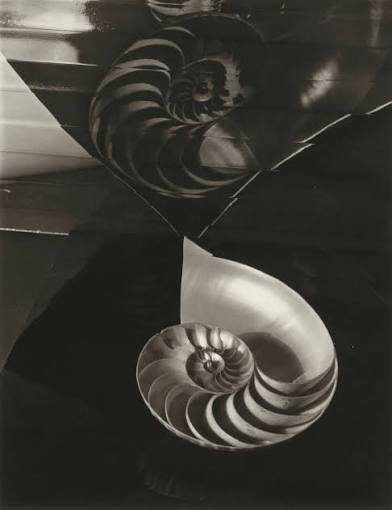
“Chambered Nautilus Space Composition,” 1949. Carlotta Corpron. Photo by Rick Coulby. Courtesy Hirshhorn.
Avery, Gottlieb & Rothko: By the Sea
Phillips Collection
Oct. 24, 2026 – Jan. 24, 2027
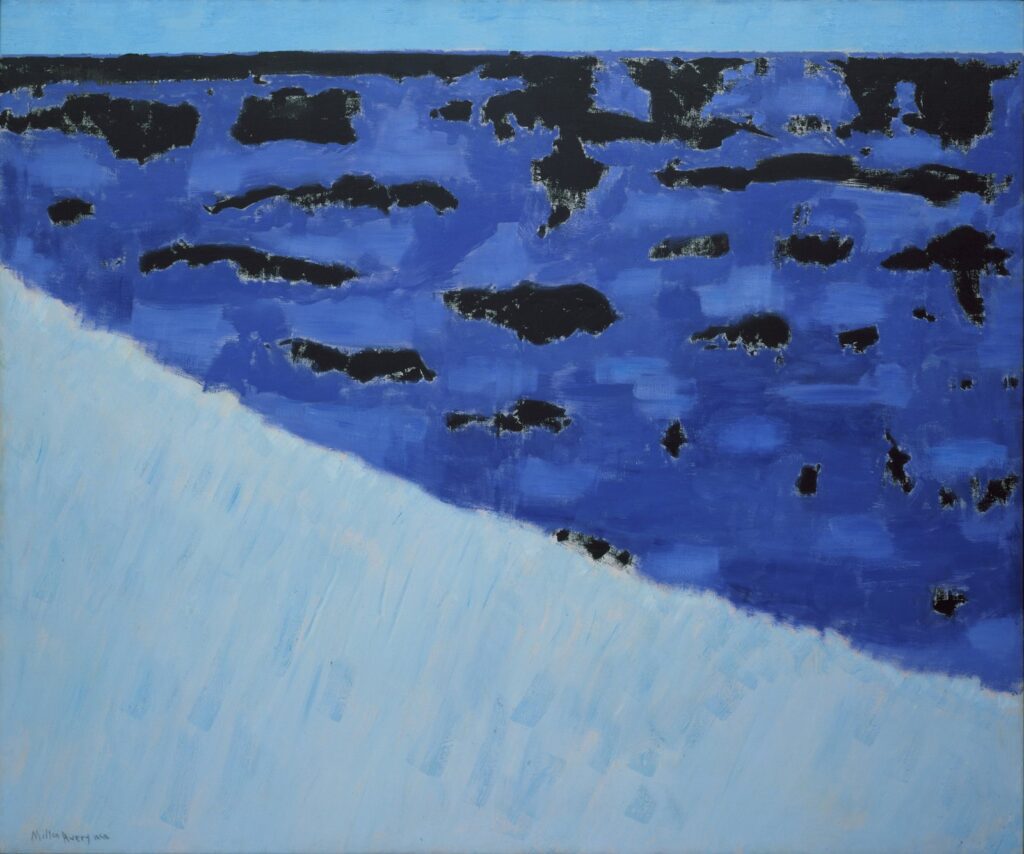
Telling the story of the enduring friendship among three towering figures in American art — Milton Avery (1885-1965), Adolph Gottlieb (1903-1974) and Mark Rothko (1903-1970) — “By the Sea” highlights the inspiration they derived from summers in Gloucester, Massachusetts, on Cape Ann, a rocky peninsula about 30 miles northeast of Boston. Through approximately 90 paintings, drawings and watercolors from the 1920s to the mid-1960s, including loans from more than two dozen collections, the exhibition reflects in depth for the first time on the artistic exchange among these three artists, two of whom, Gottlieb and Rothko, came to embrace abstraction. Curated by Eliza Rathbone, chief curator at the Phillips Collection from 1992 to 2014, “By the Sea” was organized by the Phillips in partnership with the Cape Ann Museum, where the exhibition is on view through Sept. 27, before heading to Washington, D.C.
PhillipsCollectionAvery
“Sea Grasses and Blue Sea,” 1958. Milton Avery. Courtesy MoMA.
Photographic Memory: Fifty Years of Photography at the National Portrait Gallery
National Portrait Gallery
Nov. 14, 2026 – Nov. 7, 2027
The exhibition “Photographic Memory” marks the 50th anniversary of the founding of the National Portrait Gallery’s photographs collection, which — at over a quarter-million images — now accounts for nearly half of the museum’s holdings. Encompassing more than 100 works, from the Daguerreian era of the mid-19th century to our own digital age, the exhibition explores the evolution of photographic portraiture, highlighting the role that photography has played in expanding the collection to include likenesses of those who have shaped the nation’s history but never posed for painted or sculpted portraits. Works by leading American photographers, including Mathew Brady, James Van Der Zee, Richard Avedon and Annie Leibovitz, portray some of the country’s most significant individuals, among them Abraham Lincoln, John Steinbeck, Georgia O’Keeffe and Lin-Manuel Miranda.
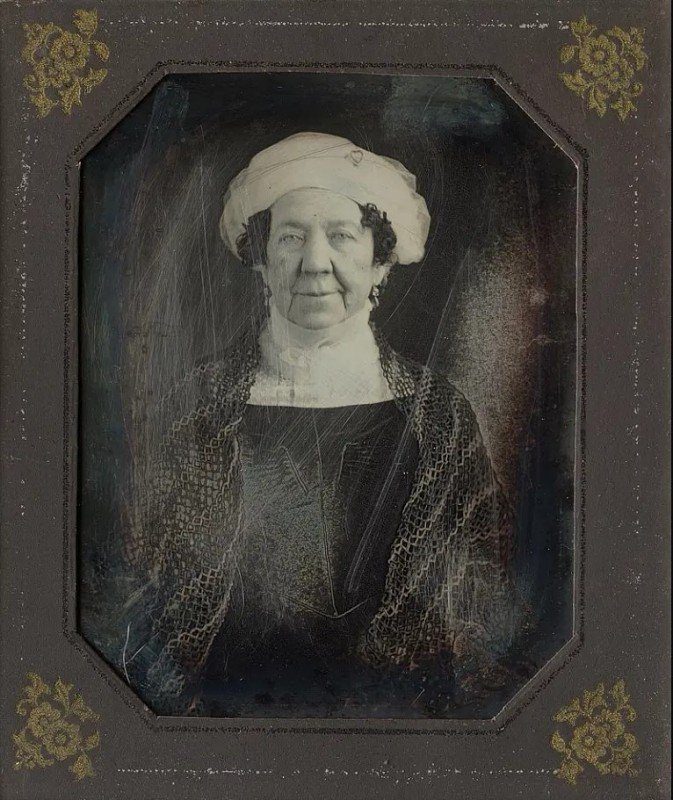
Daguerreotype of Dolley Madison by John Plumbe Jr., c. 1846. Courtesy National Portrait Gallery.
Adorned in Gold: Japanese Lacquer from the Jacqueline Avant Collection
National Museum of Asian Art
Nov. 21, 2026 – May 31, 2027
Since the 10th century, Japanese artists have turned everyday objects into luxury items, depicting plants, birds and scenes from stories in gold powder on wet lacquer, an art form known as maki-e — literally “sprinkled picture.” Visitors to “Adorned in Gold” at the National Museum of Asian Art will learn how maki-e intertwined with fashion, literature and identity in Japan’s Edo period (1603-1868), viewing dazzling designs on hairpins, combs, decorative boxes and a litter that carried a princess. The exhibition draws from the collection of the late philanthropist Jacqueline Avant (a murder victim in her Beverly Hills home in 2021), whose lifelong fascination with Japan shows how the arts can serve as a cultural bridge. A former Ebony Fashion Fair model who was married to music executive Clarence Avant, she personally identified with the technique’s gold-on-black aesthetic.
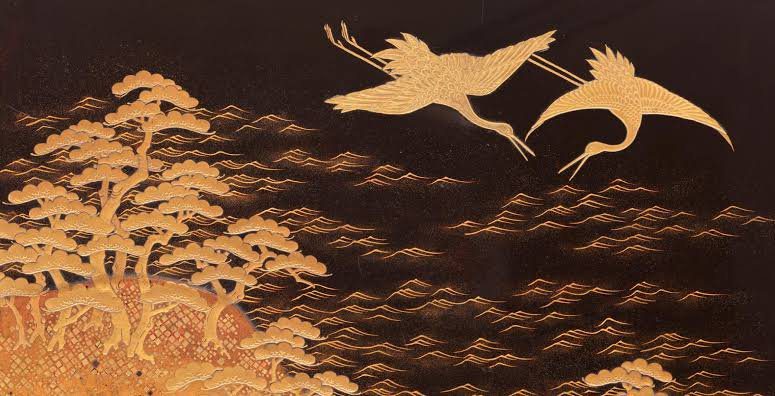
Japanese lacquer and gold document box (detail), 18th-19th century. Courtesy National Museum of Asian Art.
Also of note …
American Icon: The US Flag in Art
National Gallery of Art
Through Dec. 6
With works by such artists as painters Childe Hassam and Jasper Johns; painter and textile artist Faith Ringgold; and photographers Dorothea Lange and Gordon Parks, “American Icon” traces our flag’s journey through art to reveal a nation constantly redefining itself.
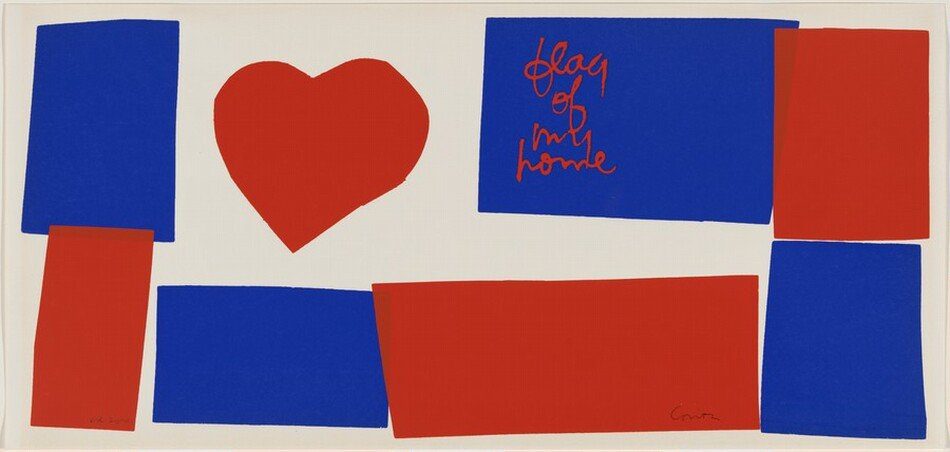
“Flag of My Home,” 1976. Corita Kent. Courtesy National Gallery of Art.
Revelation: A Journey into Abstraction
National Museum of African American History & Culture
Opened June 12
Organized into five thematic sections, “Revelation” highlights the various ways that African American artists such as Alma Thomas, Al Loving, Simone Leigh and Theaster Gates have used abstraction as a language of cultural memory, protest, identity and transformation.
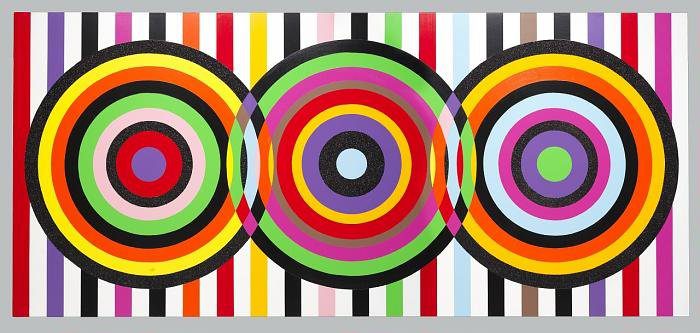
“Untitled (Triple Consciousness),” 2022. Rico Gatson. Courtesy National Museum of African American History & Culture.
Much Here Is Beautiful: Photography Surveys of the U.S. Bicentennial
Smithsonian American Art Museum
Sept. 18, 2026 – April 18, 2027
Assembling 225 photographs, “Much Here Is Beautiful” puts images taken by over 70 photographers as part of the Surveys Grant Program — a Bicentennial initiative of the National Endowment for the Arts — in the context of earlier federal photography surveys.
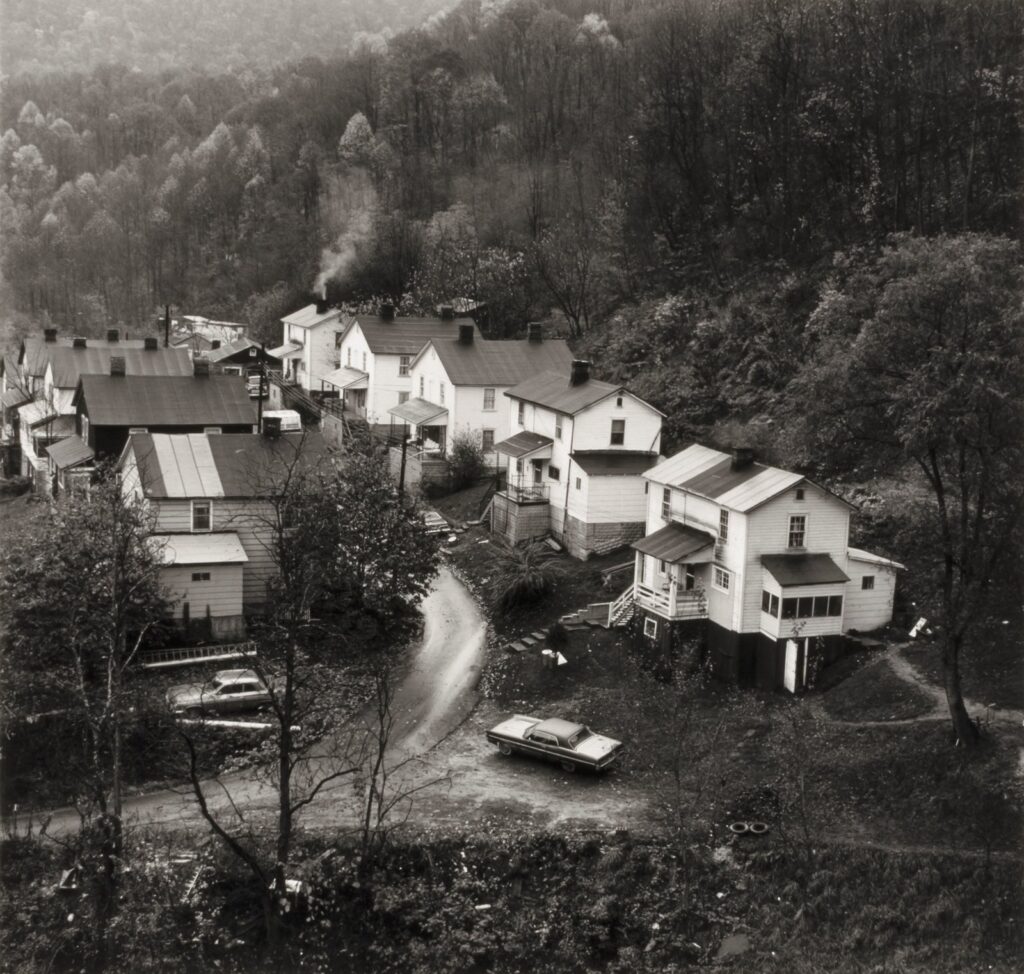
“Former Company Houses, Jenkins, Letcher County, Kentucky,” 1975. Ted Wathen. Courtesy Smithsonian American Art Museum.