
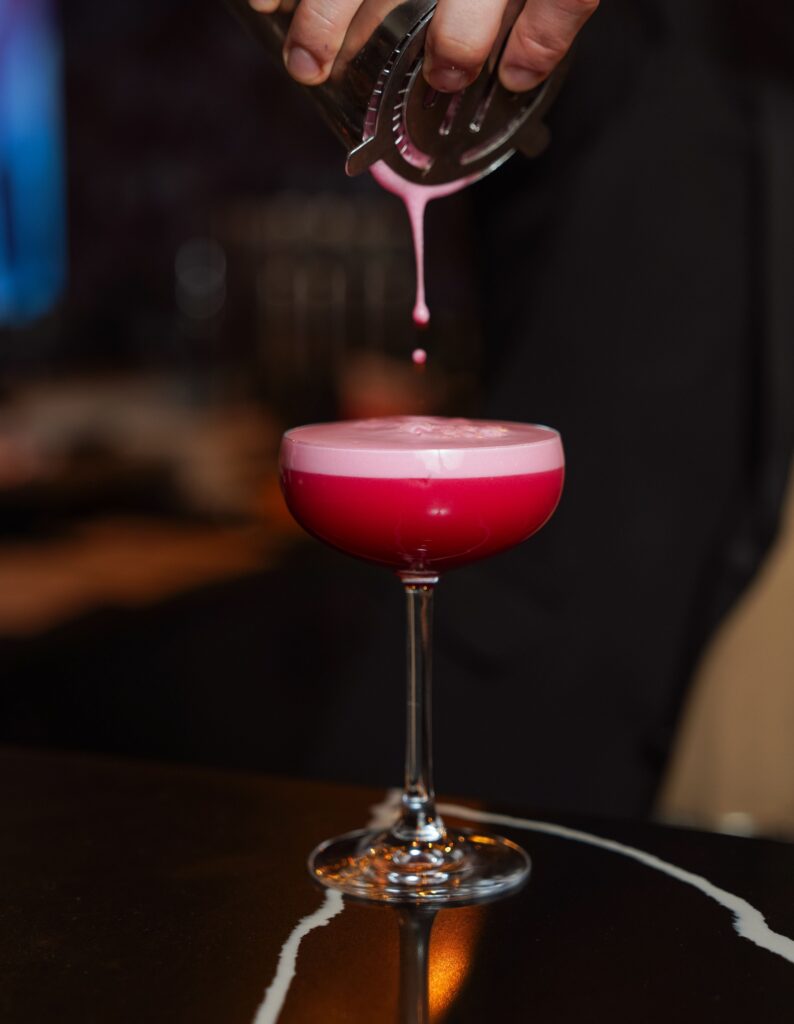
Cocktail of the Month: The Pink Lady
By • October 12, 2026 0 312
October is Breast Cancer Awareness Month, which began in 1985 as a weeklong American Cancer Society initiative to promote mammograms. Launched with help from former first lady and breast cancer survivor Betty Ford, the program expanded into a monthlong observance dedicated to education and screening.
Today it’s marked in numerous ways, including the showing of solidarity by wearing pink ribbons and clothing. Sharing educational posts, personal stories and prevention tips on social media amplify the message, using hashtags like #PinkOctober. Local events such as 5K runs and charity walks help raise money for research and community support. Even the NFL participates, with players wearing pink athletic shoes.
In support of cancer research and charities like the Susan G. Komen Foundation, many fundraising galas and functions feature signature cocktails and mocktails and some restaurants offer pink-themed drinks in October.
Prominent concoctions include the Pink Power Cosmo, a strawberry-infused version of the “Sex and the City” tipple, invented at Houston restaurant M.L.Rose. (In the TV series, Samantha, play by Kim Cattrall, battled breast cancer.) Sales of the cocktail, made with Three Olives Vodka, strawberry purée, lime and cranberry juice, go directly to the YMCA’s After Breast Cancer program for survivors.
National chain Howl at the Moon serves the Pink Paradise — a mixture of rum, vodka, X-Rated Liqueur and fruit juices — year-round. A share of the proceeds goes to the Open Arms Breast Cancer Outreach Fund.
However, more than a century ago, long before these drinks were created, a universal pink cocktail appeared.
Originating in the early 1910s, the Pink Lady is named after a hit Broadway musical of 1911 starring Hazel Dawn. Dawn claimed it was created for a surprise party in her honor at Murray’s Roman Gardens on 42nd Street.
The earliest documented recipe appeared in Jacques Straub’s 1913 “Manual of Mixed Drinks,” featuring gin, applejack (apple brandy), lime juice and grenadine.
The drink surged in popularity during Prohibition because the sweet contents effectively masked the harsh taste of bootleg, low-quality gin.
When egg whites were introduced, the Pink Lady evolved to display a silky, frothy foam top, transforming the cocktail into a favorite among high-society circles. The first published recipe to include an egg white was in Harry Craddock’s “The Savoy Cocktail Book” of 1930.
Due to its bright pink color, the Pink Lady has often been written off as a superficial “ladies’ drink,” even though its gin-and-applejack base makes it surprisingly strong.
According to the Wall Street Journal, actress Jayne Mansfield commented, “I do like a cocktail,” specifying “a Pink Lady, before dinner.” Mansfield was something of a pink lady herself. Her Hollywood home was pink, inside and out. Dubbed “The Pink Palace,” it even had pink fluorescent lighting.
With the ongoing revival of classic cocktails, maybe it’s time to reconsider the Pink Lady.
If made with good-quality grenadine, the earthy pomegranate flavors meld nicely with the botanical elements from the gin, while the applejack adds a sweet, but full-bodied, note. The egg white finishes it with an indulgent, meringue-like topping.
October seems the perfect month to launch this trend.
The Pink Lady
1 1/2 oz. London dry gin
1/2 oz. applejack (or apple brandy)
3/4 oz. freshly squeezed lemon juice
1/4 oz. grenadine
1 egg white
Combine the gin, applejack, lemon juice, grenadine and egg white in a cocktail shaker without ice. Shake vigorously for about 15 seconds to emulsify the egg white. Add ice to the shaker and shake again for another 15 to 20 seconds until well chilled. Fine-strain the liquid into a chilled cocktail coupe. Garnish with a maraschino cherry.