
CAG’s ‘Hidden Dreams’ Highlights Overlooked Women of 1963 March on Washington
By • February 5, 2026 0 117
By Mia Pech
The Citizens Association of Georgetown hosted an evening in honor of Black History Month at Georgetown Visitation Preparatory School. The program was called: “Hidden Dreams: The Women of the 1963 March on Washington.”
The event opened with an impressive performance by five students from Duke Ellington School of the Arts. The students sang a selection of songs that immediately captured the audience’s attention.
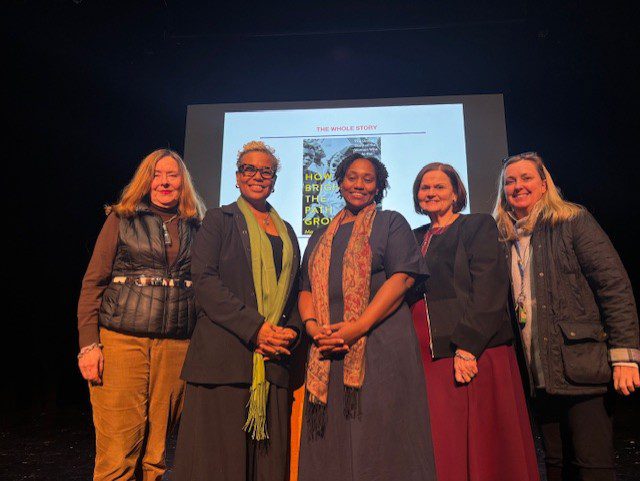
Stephanie Bothwell, Citizens Association of Georgetown Board, LaMarr Funn, Associate Director, Duke Ellington School of the Arts, Dr. Marcia Chatelain, Dr. Barbara Edmondson, President, Georgetown Visitation Preparatory School, Ashley Klick, Pastoral Associate, Holy Trinity Catholic Church. Photo by Paul Maco
The guest speaker for the evening was Marcia Chatelain, who is professor of the Presidential Penn Compact of Africana Studies at the University of Pennsylvania. She gave a compelling talk exploring the crucial but often overlooked contributions of women to the historic 1963 March on Washington. Chatelain, who previously taught at Georgetown University and maintains deep ties to the Washington, D.C., community, also spoke about her upcoming book. “How Bright the Path Grows: The Untold Story of Women Who Made the March on Washington,” scheduled for publication this September.
During her presentation, Chatelain shared stories of influential women including Rosa Parks, Daisy Bates, Diane Nash and Josephine Baker. She encouraged the audience to connect personally with the history, saying she hopes listeners “see some part of your own story in the story of the women of the March on Washington.” Chatelain then explained how many women played key leadership and organizational roles, despite receiving limited public recognition at the time.
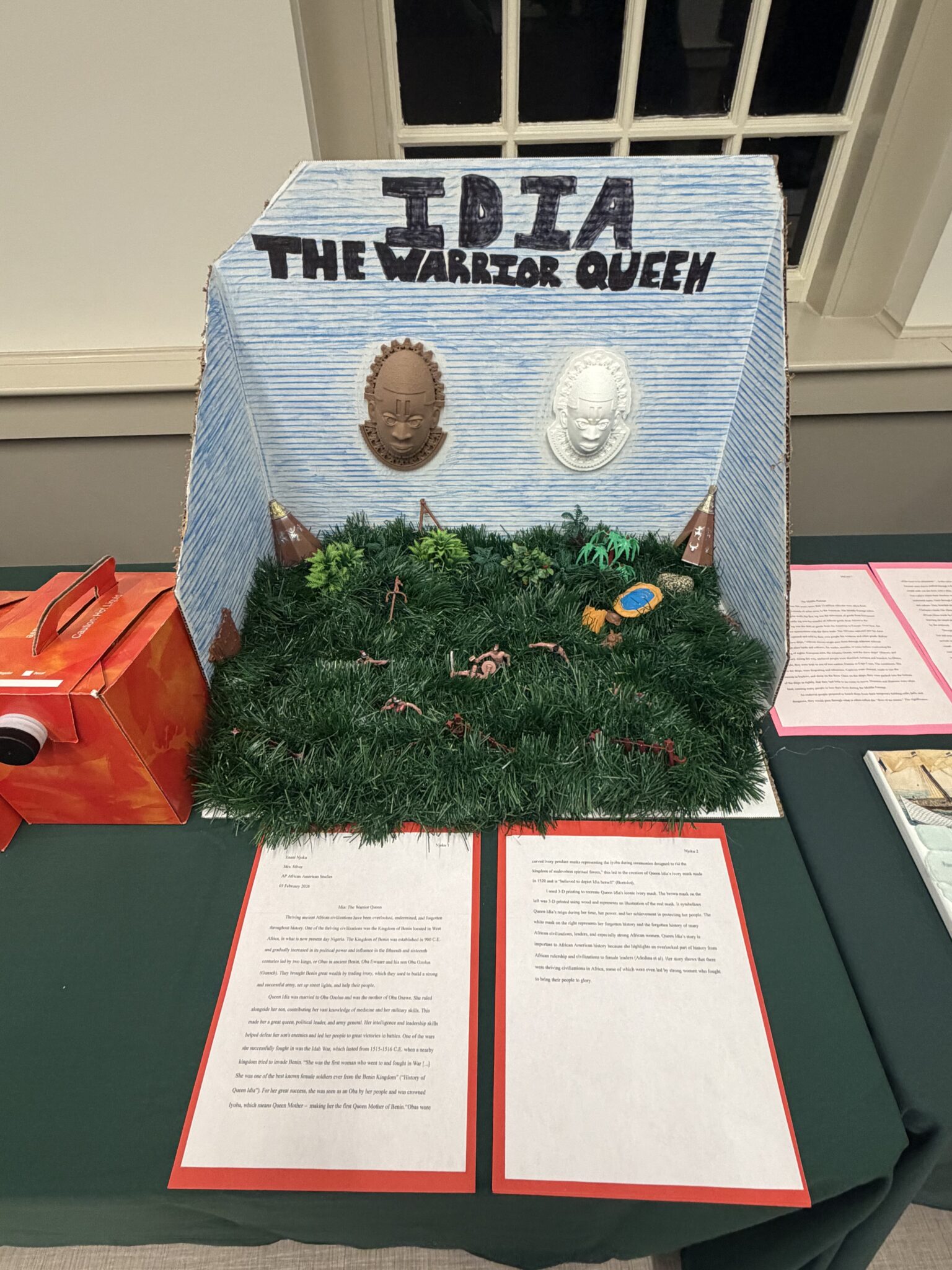
Photo by Mia Pech.
She also reflected on the persistence shown by activists during difficult moments, reminding the audience that “every day, we make a decision for the show to go on, whether it is in our performances, political actions, respect for our neighbors, or respect for history.”
In addition to the performances and guest speaker, attendees were able to view a small exhibition set up in the hall featuring student artwork. The pieces offered creative interpretations related to Black history, culture and civil rights.
One display featured two dolls hanging from a balance scale placed in front of a backdrop that appeared intentionally dark and distorted. A newspaper clipping about segregation rested below the display. The piece visually represented the idea of inequality and emotional weight of segregation. The contrast between the dolls and the uneven scale made the message feel especially striking and drew many viewers to stop and take a closer look.
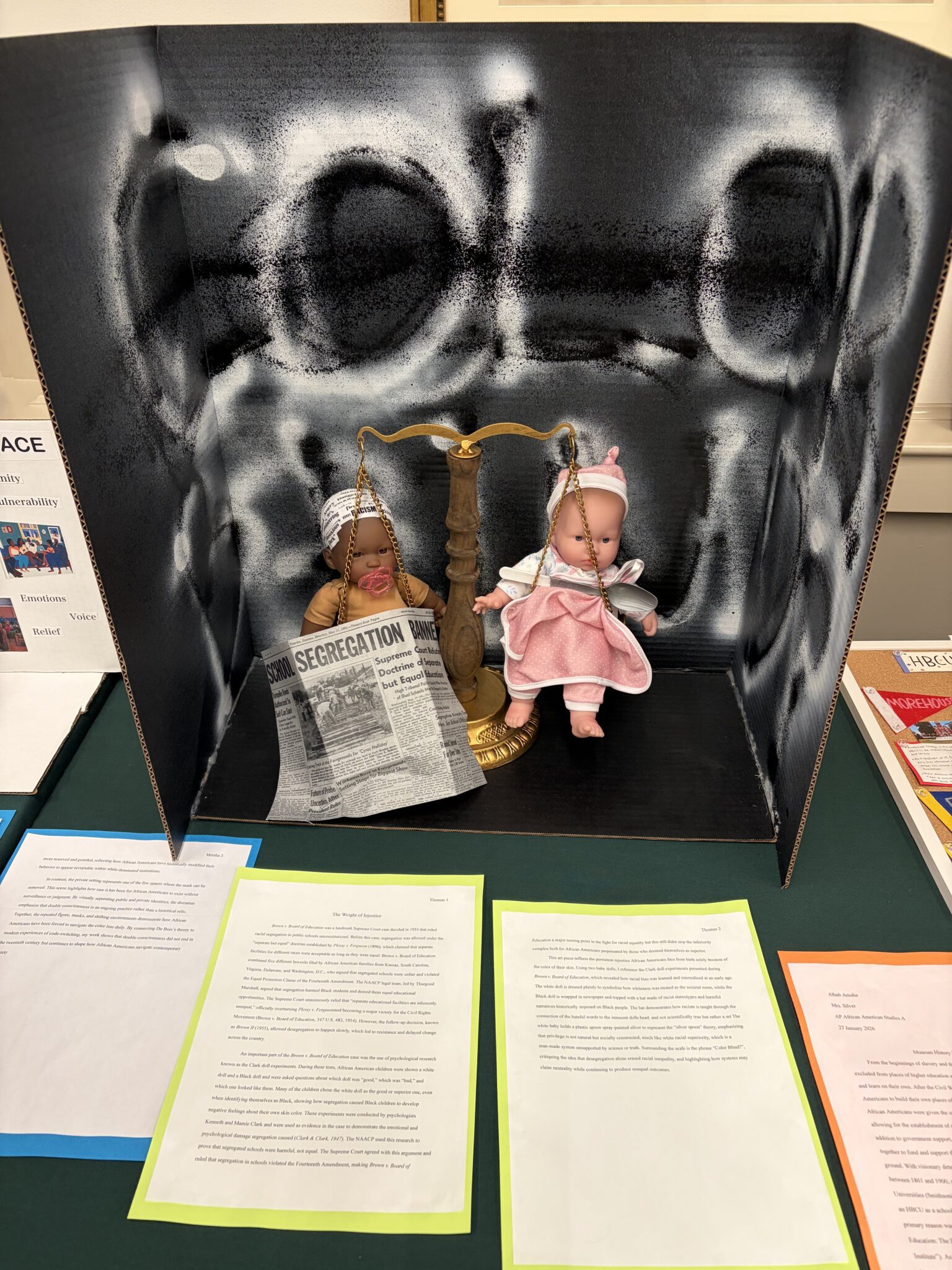
Photo by Mia Pech.
The program ended with a final musical performance by Duke Ellington students, bringing the evening full circle.


