
Editorial: Budget Tweaks and Woes
By • July 16, 2025 0 442
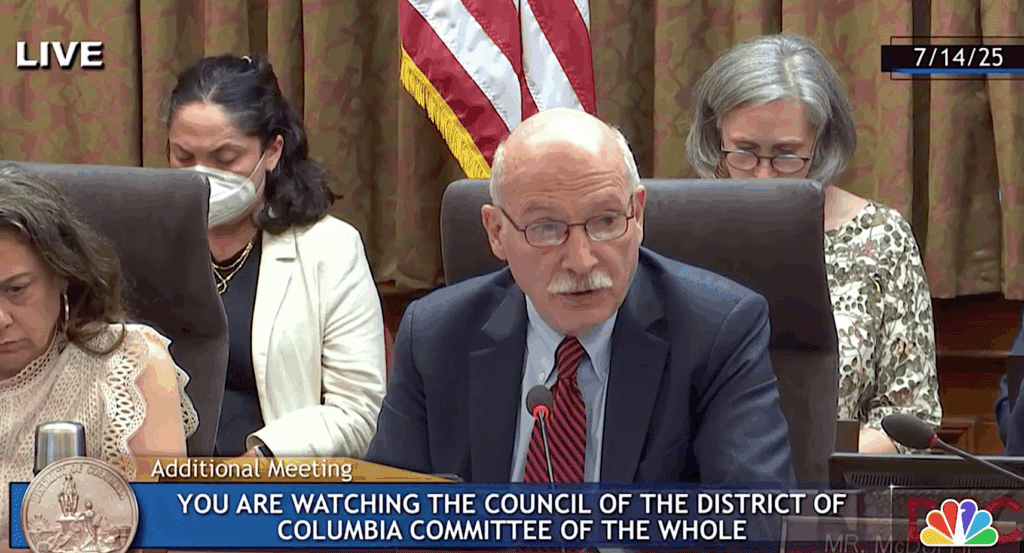
The time has come to get this budget done. The Council of the District of Columbia got that started on July 14 — after some tweaks — with a first vote on D.C.’s 2026 Budget, approved unanimously.
In late May, Mayor Muriel E. Bowser was a little late in presenting her $21.8-billion fiscal year 2026 budget, which stresses business growth investment and the city’s sports and entertainment economy. (Money pulled by the House from the 2025 budget never made it back.) Also, an additional loss of $1 billion in city revenue is foreseen over the next five years.
“If you know you have fewer revenues, then you have to make some tough decisions,” said Bowser. “Our path to deal with that is to grow the economy, to create more economic activity.” Critics say the mayor’s growth agenda is “an inequality agenda,” considering the cuts to programs in her proposed budget.
Council Chair Phil Mendelson criticized Bowser’s budget for being excessive. “It is spending above what was appropriated,” he said. “It is in violation of the Anti-Deficiency Act, and we should not have to fund that. The mayor should not be overspending, and the CFO should not be allowing the overspending.”
The Council approved funding for a Commanders stadium at the RFK site. (It will consider details in a separate bill.) A proposed compromise on Initiative 82, concerning the tipped minimum wage, was defeated; the controversial, sometime heated, issue will have to be revisited. As for Initiative 83, ranked choice voting was funded but not the open primary part.
Still, amid the cuts for some programs, a Georgetown favorite got a reprieve: there’s now $600,000 for use by the Boys & Girls Club at Jelleff Recreation Center. Other items like $250,000 for rebates or vouchers so that District residents can buy electric bicycles seemed silly. We could go on …
For now, the Council is set to take its second and final vote on July 28. Expect more tweaks.
D.C.’s faltering revenues will remain a problem, along with the occasional interference by those in Congress and the White House. Still, let’s ask the question: Does the structure and size of D.C. government add to our budget woes? We’ll check that out next time.


