
After All That, Council Passes $22-Billion Budget
By • August 4, 2025 0 881
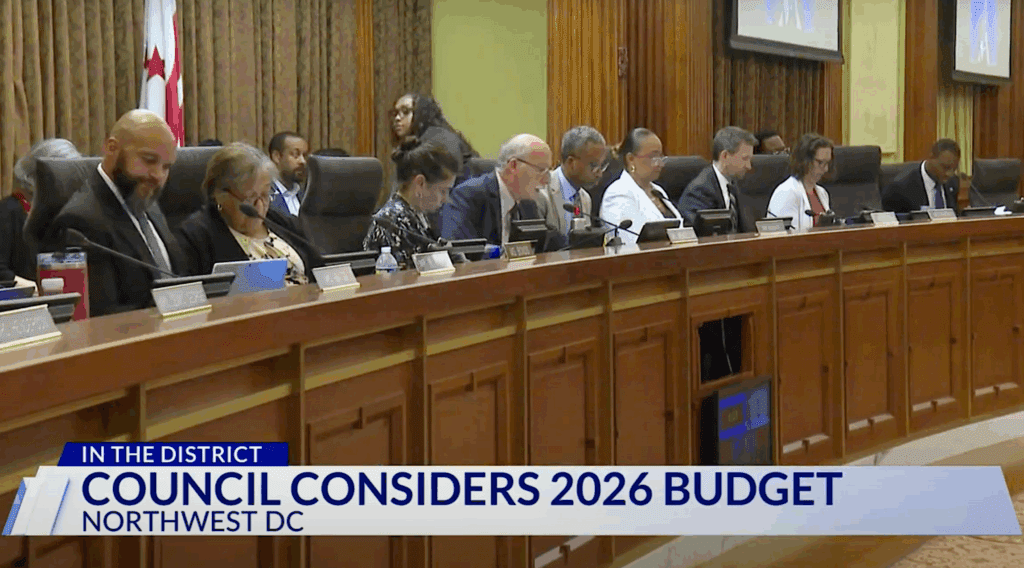
After months of agony, weeks of heated discussions and two hot (literally and physically) days of considering last-minute amendments (some on issues believed to be long resolved), the Council of the District of Columbia on July 28 passed its 2026 Fiscal Year Budget. The final vote was 10-2 in favor. The total budget: $22 billion.
Last-minute changes were necessitated by the sudden unexpected steep downturn of annual projected revenue to come into the District in the next few years. The budget is full of “trade-offs” as the Washington Post noted. The issues were split between two competing priorities for funding for the greater good: enhancing the business community that could build back jobs and attractions for growing commerce and attracting visitors and residents. Or increased funds for services and support for the city’s poorest residents who always are impacted the most in any downturn.
Mayor Muriel Bowser and the majority of the Council sided for support for business initiatives that would help the city grow in the years to come. In June, Bowser promised that there would be no cuts in basic education programs. She promised no one would be laid off their city-funded jobs in the new budget, but that there would be a hiring freeze.
Opponents argued to keep adult health programs and a minimum wage package for employees earning tips. They temporarily stopped council proceedings and were removed from the meeting when arguing for enhanced child tax credits (by raising taxes), youth violence mediation programs and “almost every climate and environmental law and rule we’ve got”.
In short, early analysis of the budget cite various “winners” and “losers.” The Council voted to continue and even enhance support for investing in businesses and the revitalization of downtown. That included millions of dollars for sports business enhancement, including, of course, the investment in the RFK site, a restructured tennis center in Rock Creek Park and a reformed sports wagering system. Funds were allocated to continued converting empty downtown offices to residential spaces and for an extensive river cleanup program, to name a few.
Losers included general programs in adult health including city-funded replacememt for some Medicaid programs that the Trump administration is cutting as well as formerly budgeted funds for youth violence mediation programs. Cuts were also made in the city’s State Department of Education proposals such as creating an alternative school and math training for teachers. The street car proposal and a marked bike lane on Connecticut Avenue were also cut.
The shortfall in 2026 revenue to D.C. was partially due to the sudden reduction of the federal workforce working and commuting to the city when the newly elected Trump administration ordered massive downsizing of executive agencies in D.C., such as USAID, VOA, the Department of Education and even the State Department. Thousands of D.C. workers and residents and the auxiliary business that served them were impacted in the downtown already struggling with greatly reduced numbers of workers no longer coming into D.C. because of remote work since the Covid-19 restrictions. That added to already active concerns about the future of restaurants and eateries in the city due to rising costs of food and workers wages.
The new budget now awaits approval by Congress. A new revenue estimate in September by Chief Financial Officer Glen Lee will also be crucial as to what programs may be further cut or kept.


