
The Brandy Melville Effect
By • September 9, 2025 0 2516
By Annabel Taylor
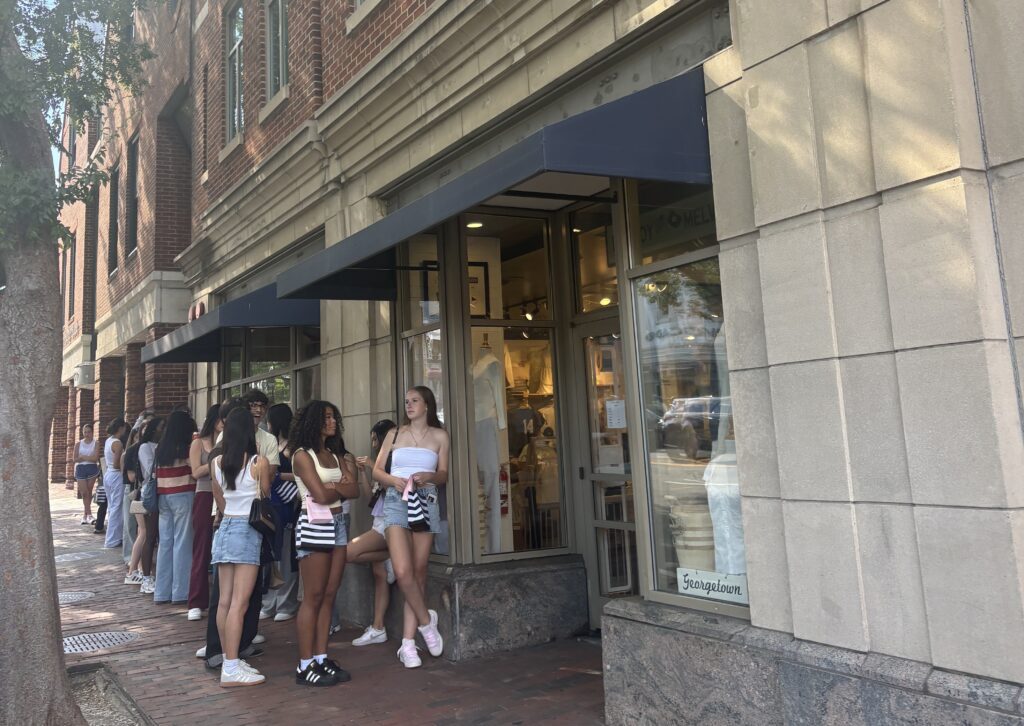
On a Sunday evening on M Street, teenage girls dressed in nearly identical babydoll tees and denim skirts stand in a line stretching down the block, waiting to be let into one of Georgetown’s hottest shopping destinations: Brandy Melville.
Founded in Italy in the early 1980s by textile entrepreneur Silvio Marsan and his son Stephan Marsan, now CEO, Brandy Melville opened its first U.S. store in 2009 and gained rapid popularity in the 2010s, thanks in part to celebrities like Kendall Jenner and Kaia Gerber.
With visibility, however, comes controversy. Critics have compared Brandy Melville’s branding to Abercrombie & Fitch’s early-2000s marketing campaigns: skinny models clad in trendy, disposable clothes.
But while Abercrombie rebranded to adapt to modern standards, Brandy Melville did not face significant public scrutiny — that is, until filmmaker Eva Orner kick-started a national conversation in the 2024 HBO documentary “Brandy Hellville & the Cult of Fast Fashion.” Since then, Brandy Melville has faced criticism for labor practices across the supply chain and its “one size fits most” clothing.
In the documentary, former employees reported issues related to internal workplace culture, alleging that hiring practices and decision-making favored a narrow standard of beauty, contributing to an environment of exclusivity. Allegedly, staff members who modeled for the brand’s Instagram were required to provide full-body photos of themselves and were consequently fired if they didn’t fit the desired image of the brand.
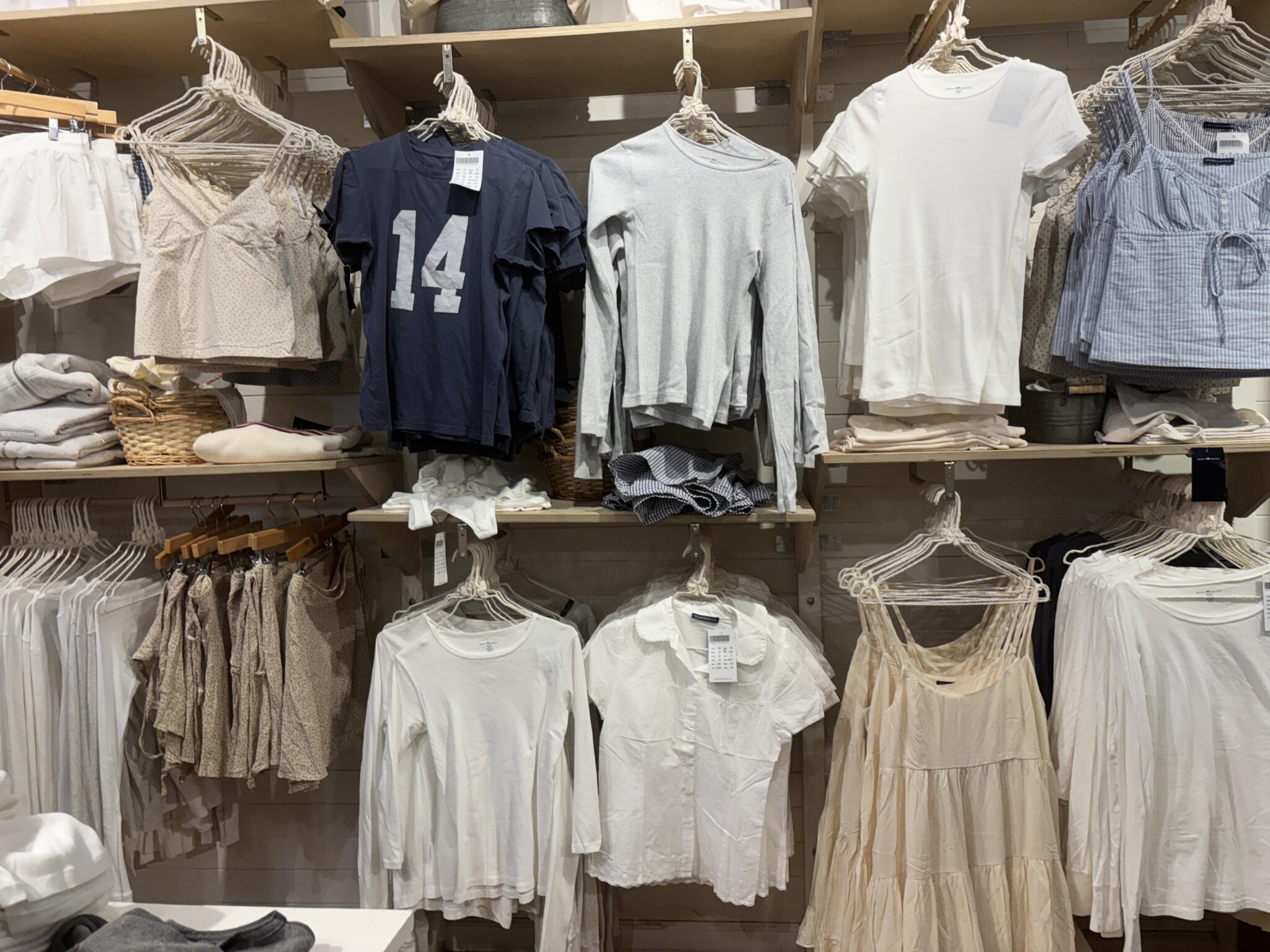
Brandy Melville markets their clothing as simple, timeless and inexpensive. Photo by Annabel Taylor.
The controversy extends beyond the fitting room, unfurling to Ghana, where shorelines serve as a landfill for the Western world’s unwanted items. Photographs from the documentary show large quantities of discarded clothing in the area, including items from Brandy Melville and various other fast-fashion brands.
Sammy Oteng, who works with the Or Foundation promoting ecological alternatives to fast fashion, spoke about the plight of Ghanaian workers and the environment in the documentary.
“Just because you are not seeing a beach as dirty as the one we see here in Ghana does not mean it doesn’t affect you,” said Oteng. “So, the question we need to ask is: Where do I stand in this problem?”
While the brand faces criticism abroad, the conversation at the store level often centers on sizing. Many argue that Brandy’s sizing contributes to unrealistic beauty standards for young girls. Some shoppers note that there is not as much sizing disparity as perceived by the media. Camille DiGiovanni is a high school junior who regularly shops at Brandy. She noticed that sizing fluctuates depending on the product.
“Maybe not the tiny tops, but most casual shirts, sweatshirts and sweatpants will fit a lot of people,” said DiGiovanni.
Regardless of ongoing criticism, Brandy Melville’s revenue reflects its sustained appeal. According to the Wall Street Journal, the brand’s annual revenues for 2023 were $212.5 million, a $43.9-million increase from 2019. The line outside the Georgetown store doesn’t appear as if it will be waning anytime soon, either. The brand remains at the center of an ongoing debate on the intersection of fashion, ethics, body image and the environment.


