
Year-End Crime Review: A Safer Year for D.C.
By • December 9, 2025 0 637
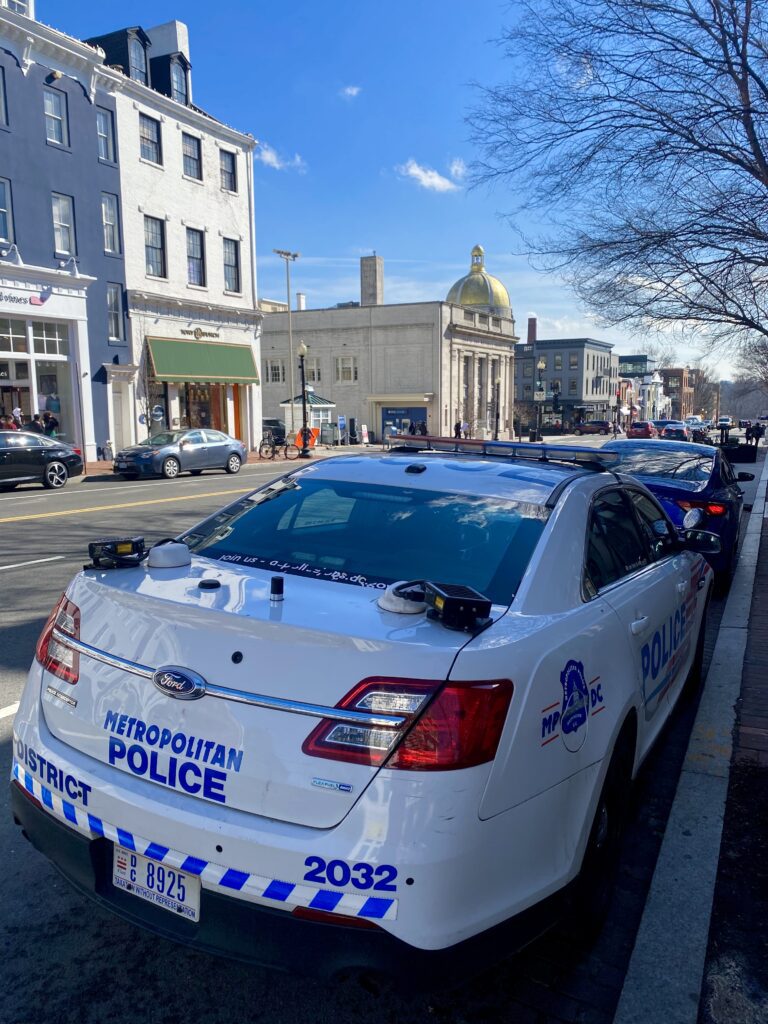
Washington, D.C., is closing out 2025 with some of the strongest crime declines the city has seen in over a decade. The improving landscape has direct implications for Georgetown, a community focused on sustaining a safe and stable environment.
Citywide Crime Declines: The Numbers
D.C.’s crime trajectory in 2025 shows measurable, data-driven progress compared with 2024, according to MPD’s data through mid-December.
Violent crime declined 28 percent year over year, dropping from 3,259 incidents in 2024 to 2,336 in 2025. Homicides fell 30 percent, continuing a multiyear trend of reaching historic lows, and robberies fell 36 percent, while assaults with a dangerous weapon declined 10 percent.
Overall, crime dropped 17 percent, reflecting improvements across most major categories.
Property crime decreased 15 percent, with burglaries down 29 percent year over year. Theft from auto and motor vehicle theft remain elevated relative to pre-pandemic norms, though both categories still recorded declines in 2025 (down 18 percent and 21 percent, respectively).
The breadth and consistency of these reductions reflect a meaningful improvement in public safety across the District.
What This Means for Georgetown
Georgetown has long maintained lower violent crime levels than much of the District, and the citywide reductions recorded in 2025 reinforce that stability. Lower violent crime pressure citywide reduces spillover risks into Georgetown’s commercial and residential areas.
Predictable public safety conditions support property values, retail investment, tourism and the broader business environment. Commercial corridors including M Street, Wisconsin Avenue, Georgetown Park and the waterfront benefited from steady foot traffic and strengthened perceptions of safety.
Second District MPD, which oversees Georgetown, has been able to prioritize proactive engagement and community policing rather than crisis response.
Georgetown’s own civic infrastructure also plays a role. The Citizens Association of Georgetown’s Block Captain Program continues to serve as a well-established, hyperlocal communication and safety network. Block Captains help distribute timely public safety updates, report neighborhood concerns and maintain direct lines of communication with MPD and city agencies. Along with the Citizens Advisory Council, this volunteer-led structure reinforces day-to-day situational awareness and contributes to the neighborhood’s overall resilience.
Where Attention Is Still Needed
Not all crime categories improved evenly. Auto-related offenses and retail theft continue to affect parts of the city, especially busy commercial zones. While these issues were less pronounced in Georgetown in 2025, they remain relevant areas for targeted enforcement and community awareness. The substantial reduction in violent crime gives MPD and neighborhood groups added bandwidth to address these quality-of-life concerns as priorities shift into 2026.
The Outlook for 2026
If current trends hold, 2026 begins with one of the strongest public safety foundations D.C. has seen in years. Georgetown enters the new year with low violent crime levels; a robust civic ecosystem, including programs like CAG’s Block Captain network; consistent MPD engagement within the Second District; and a public safety environment more predictable than at any time since before the pandemic.
For residents, businesses and visitors, 2025 provides something increasingly rare in major U.S. cities: sustained, measurable improvement in day-to-day safety. Georgetown, supported by engaged neighbors and strong institutional partnerships, remains one of the District’s most secure and well-organized urban communities.