Black Luminaries of Georgetown
By • January 13, 2026 4 343

As we begin to celebrate Georgetown’s 275th birthday and our nation’s 250th, let us honor America’s Black luminaries, especially those connected to Georgetown.
We can start by remembering Martin Luther King Jr., just in time for MLK Day on Monday, Jan. 19.
Here in Washington, D.C., we recall the presence of Frederick Douglass, who hammered against and transcended the scourge of slavery, and surveyor Benjamin Banneker, who helped determine the boundary lines of the future District of Columbia.
In Georgetown, an early example of delayed freedom was Yarrow Mamout, who arrived in America, an enslaved man, in 1752. Gaining his freedom at age 60, Yarrow (his surname), a “jack of all trades,” became a financier, held stock in the Bank of Georgetown and owned a home at 3324 Dent Place NW. His portrait, loaned to the National Portrait Gallery a few years back, hangs in the Georgetown Public Library’s Peabody Room.
Fifth-generation Washingtonian, P Street resident and educator Monica Roaché has said: “The African American community contributed to Georgetown. There were doctors, lawyers, educators and more.” She noted that “Georgetown was the first D.C. neighborhood to experience gentrification.”
Roaché’s family was part of “Black Georgetown Remembered,” a video and book project by Georgetown University, which in recent years has confronted its connection with the Jesuits’ 1838 sale of 272 enslaved persons, establishing a Working Group on Slavery, Memory and Reconciliation in 2015. The school has offered legacy status in admissions to descendants of the 272.
Among the university’s luminaries, there is, of course, championship-winning basketball coach John Thompson Jr. His name will soon adorn D.C.’s newest public high school. And deep respect to Patrick Ewing, too.
The Rev. Patrick Healy, S.J., who led Georgetown University in the late 1800s, was the first Black president of a major university — fully acknowledged in the 20th century. Like Barack Obama, he was half Black, half Irish. It is both noteworthy and ironic that Georgetown’s skyline is anchored by a landmark named for an African American priest.
The town’s luminary list continues. Anne Marie Becraft founded a school nearby for Black girls and later became one of America’s first Black nuns. Emma V. Brown was the first African American teacher employed by the D.C. public school system. James H. Fleet Sr. was an educator and abolitionist.

Coach John Thompson Jr. at the 2016 groundbreaking of the athletics facility named for him. Courtesy Georgetown University.
On the east side, Alfred Pope and Hannah Cole Pope were among the most influential Black Georgetowners of the mid-to-late 19th century. Owner of coal and lumber yards, Alfred was a real estate magnate, politician and philanthropist. A few decades past slavery, other prominent citizens included Robert Holmes, John Ferguson, Moses Zacariah Booth and Elizabeth Oliver Booth, Dr. C. Herbert Marshall and Dr. Joseph Dodson.
Tennis doubles champions Roumania and Margaret Peters lived at 2710 O St. NW and played at the Rose Park clay courts, which the city declared “For Colored Only” in the 1940s. After residents tore down the sign, the park became one of the District’s first to be integrated. A memorial plaque honoring the Peters sisters, paid for by then-Secretary of Homeland Security Jeh Johnson and his wife Susan, was added in 2016.
Remaining in Georgetown when “Black Georgetown Remembered” was written were the families Bowman, Burnett, Butler, Calloway, Clark, Gaskin, Jackson, Jones, Marshall, Mitchell, Peebles, Roaché, Sewell, Waters and Wharton.
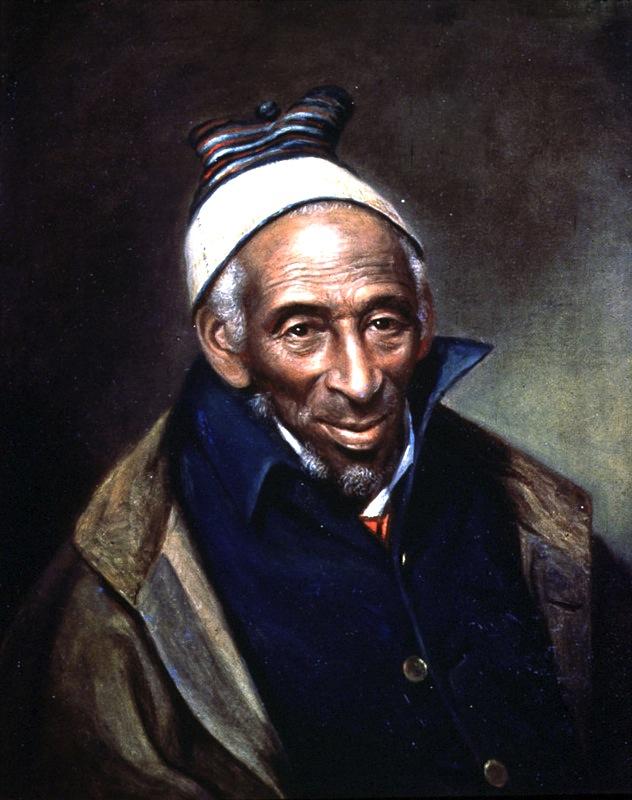
Yarrow Marmout.
We remember Catherine Bowman, who passed away in January of 2022. The 97-year-old Washington native, who lived on the 2700 block of P Street NW, would tell stories of the Black neighborhood where she grew up, next to Rose Park.
Today, we can walk around the town and read historical markers erected by the Georgetown African American Historic Landmark Project, reminding us that Black history is all Americans’ history.


Yarrow didn’t own slaves.
I was aghast to read of Yarrow, “He was one of the few Black individuals in D.C. to own enslaved persons.” This is INCORRECT. Mr. Delaney knows better than this. Please correct at once!
Corrected! Please pardon our editing error.
Let me offer one more name to the distinguished roster in your article about “Black Luminaries of Georgetown”: Denyce Graves. She did not live in Georgetown (but rather in SW), but spent some of her formative musical years at the Duke Ellington School here, which helped nurture the talents which would make her one of America’s leading operatic mezzo-sopranos of the late 20th/early 21st centuries. Her farewell stage appearance will occur next Sat. (1/24/25) in the Metropolitan Opera’s performance (broadcast worldwide) of “Porgy and Bess.” More personally, I remember her generosity in giving a recital (free of charge) a couple years ago at the Knollwood Retirement Community in NW DC, where my mother-in-law and Ms. Graves’ former teacher at the Duke Ellington School resided.