
Susan Rhea on ‘Small and Mighty’ Keegan Theatre
By • December 1, 2025 0 604
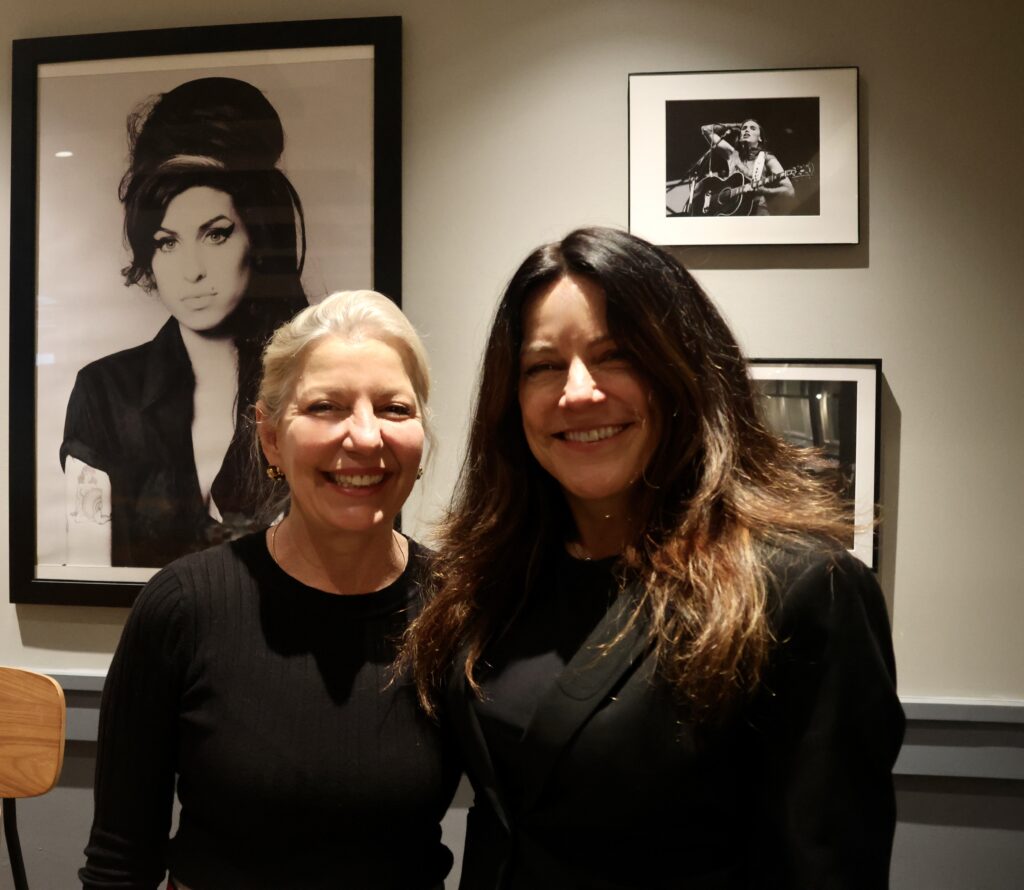
“It’s really easy to forget how far you’ve come,” Keegan Theatre Artistic Director Susan Marie Rhea told attendees at The Georgetowner’s Nov. 20 Cultural Leadership Breakfast, held at 1310 Kitchen & Bar.
The “you” apparently referred not only to the “small and mighty company,” turning 30 next year, but to herself. Her first role at Keegan — not long after the Silver Spring native returned to the Washington, D.C., area — was onstage, playing Kate in “The Taming of the Shrew” opposite founder Mark Rhea in 2000.
In those early years, performing in church basements and venues such as the Rosslyn Spectrum and Gunston Arts Center’s Theater Two, “we were all doing everything — it was thrilling.”
From 2005 to 2009, “we were straddling,” she recalled, with half the season at Arlington’s Theatre on the Run and half at 1742 Church St. NW, a former private-school gym east of Dupont Circle.
At the end of 2009, having become the Church Street theater’s resident company, Keegan’s first production was a revival of a certain rock musical based on “La bohème.”
“‘Rent’ blew up,” said Rhea. “It put us on the map.”
There was a snag, however. The theater had just one bathroom, downstairs, next to the boiler. Though an authentic touch for “Rent,” it made for drawn-out intermissions. A board member who lived next door would offer audience members the facilities in his home; others would head for 17th Street restaurants.
To relieve the situation, an anonymous donor pledged “upwards of $1 million,” the basis for a capital campaign. Keegan bought the building, closed it for a “harrowing” year and, as part of the theater’s renovation, excavated a new lower floor.
“Obviously, that changed everything,” said Rhea. The grand-reopening production, in the summer of 2015, was Tennessee Williams’s “Cat on a Hot Tin Roof.”
Presenting American classics like “Cat” had become a Keegan signature, not only in the District but in Ireland. Between 1999 and 2017, a Keegan troupe toured the Emerald Isle 14 times. Though the tradition ended due to growing demands on Church Street and the downturn in the Irish economy, “we miss it a lot,” said Rhea.
The connection continues with “An Irish Carol,” Keegan’s Dickens-inspired holiday show by Matthew J. Keenan, set in a Dublin pub. Now in its 15th year, the production has kept its lead actors, though after 10 years Rhea no longer portrays Anna (“I aged out of that play”).
She still acts with the company, however, appearing as Esther in “Everything Is Wonderful” by Chelsea Marcantel, “a quiet story about a family” — an Amish family, that is — which opened Keegan’s season. The play came from the Contemporary American Theater Festival in Shepherdstown, West Virginia, led by Peggy McKowen. “She and I have been throwing scripts back and forth,” Rhea said.
“Lizzie the Musical,” about Lizzie Borden, was 10 days from closing. “‘Lizzie’ is a rock show, it’s a party,” but with a “thoughtful message.” (Rhea admitted that she had heard from regulars who declared: “I am not interested in seeing a show about an axe murderer!”)
Following “An Irish Carol” are two world-premiere commissions: “John Doe,” a comedy by Angelle Whavers about identity; and “Midiculous,” a theater piece for young audiences by Drew Anderson and Dwayne Lawson-Brown, “Keegan’s dynamic hip-hop and spoken-word duo.”
Coming in April is Tracy Letts’s “The Minutes” (“I had to fight tooth and nail to get the rights”) and “The Play That Goes Wrong,” by Henry Lewis, Jonathan Sayer and Henry Shields, arrives in June.
Keegan’s philosophy, according to Rhea, is: Don’t add something to the play. The company’s twin touchstones are honesty and intimacy (“We cannot lie in a 122-seat theater). She also referred to “the family model,” saying “many of us were there back when we were plunging toilets,” and to the concept of a “third place,” meaning neither home nor work. “I feel like Keegan is that for a lot of people,” she said.
Keegan’s new-play development program, the Boiler Room Series, is named for the old Church Street boiler room. Pre-renovation, “we’d sit down there with beers and we’d dream.” Besides, she added, “it was warmer down there.”
Other pillars: an education program serving all eight wards, the brainchild of Managing Director Alexis Hartwick, who “came in as a stage manager”; and Keegan Connects, the umbrella for talkbacks, panels, ticket discounts and other outreach.
Rhea spoke on behalf of midsize theater companies — “why I think we’re still important.” Great theater towns like New York and Chicago have companies of all sizes, from fringe to mainstay. “This town is rich in its big theater,” she said, but it also needs “scrappy companies” and those in between. “Keegan is a pipeline,” she noted.
The downside is that, despite Keegan’s “loyal following,” it is “almost impossible” to get critics to review shows and “a challenge to get in front of funders.”
Rhea has two 30th anniversary dreams. Number one: an additional space, perhaps a black box, a shop nearer the theater or an ed center. “We love our neighborhood,” she said, “but we’re stepping over the children in our education program.” Number two, over the next five to 10 years: an endowment fund, so it’s not always the “wolf at the door.”
In response to a question, Rhea acknowledged the challenges faced by older and suburban theatergoers, pointing out that Keegan has partnered with a local garage. She commented that “audience behavior has also changed since Covid,” meaning that people are less likely to brave the outside world.
Former Council member Jack Evans asked about current support, if any, from District government. Hartwick said that the DC Commission on the Arts and Humanities was one of Keegan’s biggest funders and gave Theatre Washington a shoutout. Noting that the decline in tourism impacts funding, she emphasized that it’s up to taxpayers to let their representatives know the arts are important to them.
See a snippet from the breakfast below. Like what you see? Join us December 18 for our next one and get tickets here!


