
Kreeger Director Helen Chason’s View From Foxhall Road
By • December 22, 2025 0 827
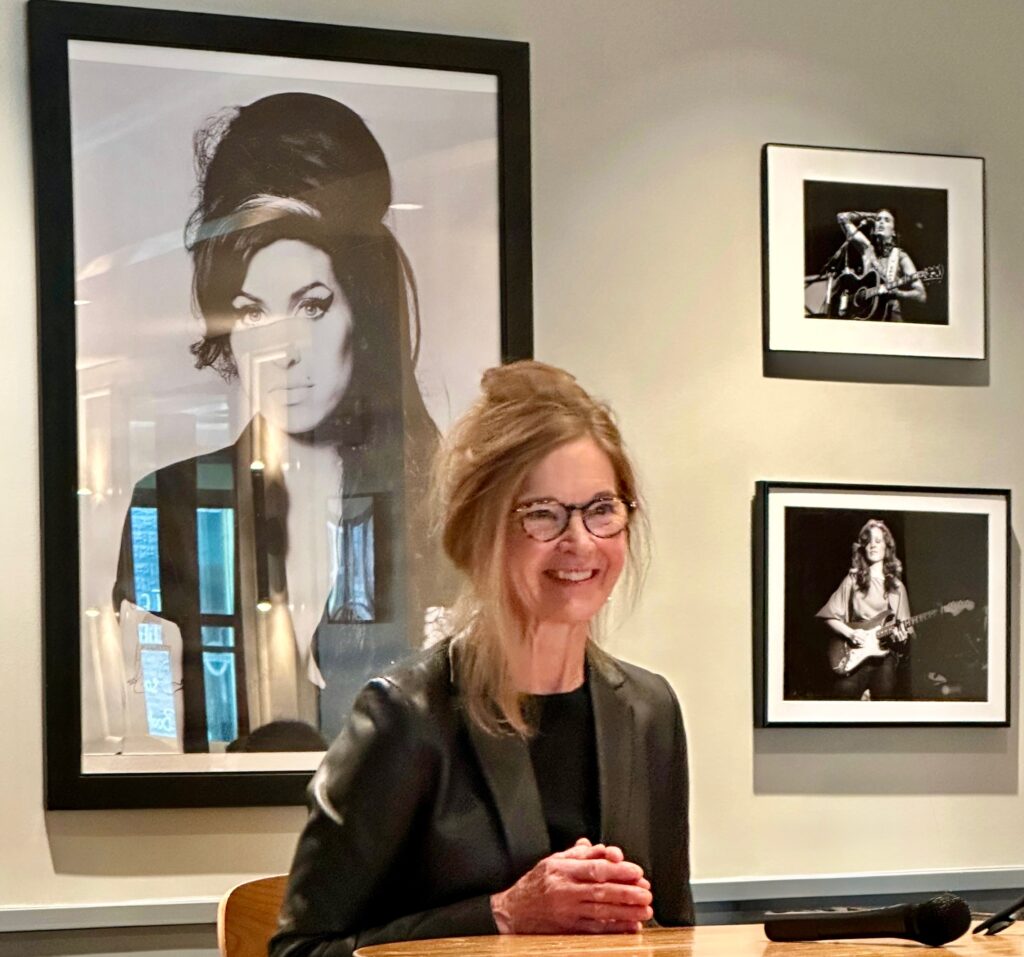
At The Georgetowner’s Dec. 18 Cultural Leadership Breakfast, held at 1310 Kitchen and Bar, Kreeger Museum Director Helen Chason explained how the founders built an exceptional collection of some 250 works of art: “They bought what they loved.”
Carmen Kreeger favored Monet; her husband David, Picasso. A Kreeger collection painting, Mondrian’s large watercolor “Dying Sunflower,” is on Financial Times art critic Ariella Budick’s latest Washington top-10 list. Chason: “It’s back on view now.”
Then there’s Miró. The collection includes 43 of his works, notably all 36 etchings of “The Mallorca Suite” and a lithographic print, “Makimono,” that extends for more than 10 yards on a silk scroll. In conjunction with the 50th anniversary of the Barcelona-based Fundació Joan Miró, they will all be displayed in the museum’s lower-level 20th-century gallery — for the first time in nearly a decade — starting May 21.
What else? “They loved Dubuffet,” said Chason. Also sculpture (see below), African and Asian art and paintings by D.C.-area artists. A Corcoran Gallery of Art board member, David Kreeger bought works at the Corcoran Biennial and directly from Washington Color School painters such as Gene Davis, Thomas Downing and Sam Gilliam.
Area artists Jae Ko, Linn Meyers, Joyce J. Scott and Renée Stout are featured in the Kreeger’s current special exhibition, “Anonymous Was a Woman,” a satellite follow-up to an exhibition at New York University’s Grey Art Museum. On view through Jan. 31, the show is part of the Collaborative, a series in which the Kreeger partners with a nonprofit organization and its associated curator, in this case, Vesela Sretenović, formerly of the Phillips Collection.
Chason shared that the 12th Collaborative exhibition, in partnership with Hyattsville-based Pyramid Atlantic Art Center, will be a solo show of works by collagist and printmaker Imar Lyman Hutchins (who attended the breakfast), opening on April 16.
Among Washington’s most philanthropic couples, the Kreegers believed that “the key to a good life was sharing,” said Chason. “They always intended to share their collection with the public,” commissioning a modernist residence that could later be converted into an art museum.
Guided by the Kreegers, architects Philip Johnson and Richard Foster created a travertine-and-glass structure on five and a half terraced and wooded acres off Foxhall Road, completed in 1963. The Kreegers’ Steinway grand piano occupies the Great Hall, a large space designed with three sail domes “so that it would hold the music in the air,” said Chason.
To present concerts, the Kreeger works with Curtis on Tour, organized by Philadelphia’s Curtis Institute of Music, and Spanish Young Music Talents, a program of the Spanish Embassy’s Cultural Office, among others. The “phenomenally popular” Jazz at the Kreeger series reflects another musical genre the founders enjoyed. Now in its fifth year, the series is curated by tenor saxophonist Elijah Jamal Balbed, a D.C. native.
Though the museum has hosted the D.C.-based Dana Tai Soon Burgess Dance Company in the past, Chason was clearly excited to announce (with Burgess on hand) “a real residency” for the company, running for two years. “Come for the dance and come for the costumes,” she said.
Other programming Chason described: with Levine Music, a reactivated Conversations program for individuals with memory disorders and their caregivers, held twice a month on Mondays, when the museum is closed to the public; a First Studio program for children aged 3 to 5 and their adult companions; weekend art workshops; and “a ton of school programs,” free of charge, including bus transportation, for all Title I schools in the city.
In response to a question about the sculpture collection, Chason stated that all the works on the museum’s terrace were purchased and sited by the Kreegers, advised by National Gallery of Art Director J. Carter Brown. The placement of contemporary works acquired later — for example, Richard Deutsch’s “Against the Day,” eight granite sculptures installed on the north lawn in 2017 — is determined by the curators and the artists.
Chason recalled that a Washington Sculptors Group outdoor show took place in the winter of 2023-24; cocoa was served. She proudly mentioned Barbara Josephs Liotta’s “Score for David Kreeger,” a recent gift from the sculptor.
The Kreeger Museum, which opened in 1994, is a project of the David Lloyd Kreeger Foundation, with which she is not directly involved, Chason said. A general operating support grant comes from the “amazing” DC Commission on the Arts and Humanities.
Citing the Kreeger’s “intimate gallery spaces,” rarely encountered in the District’s major visual-arts venues, Chason commented: “We’re not exactly a national museum.” To make the Kreeger, which isn’t on public transportation, more accessible, attendees suggested a shuttle or a partnership with a rideshare operator. The latter is under review, said Chason, but — given the opportunity the Kreeger offers to go “one-on-one with a Monet, a Picasso, you name it” — “I’m not going to complain too much.”


